
First Weeks at War With Iran: What has the U.S. Done so far?
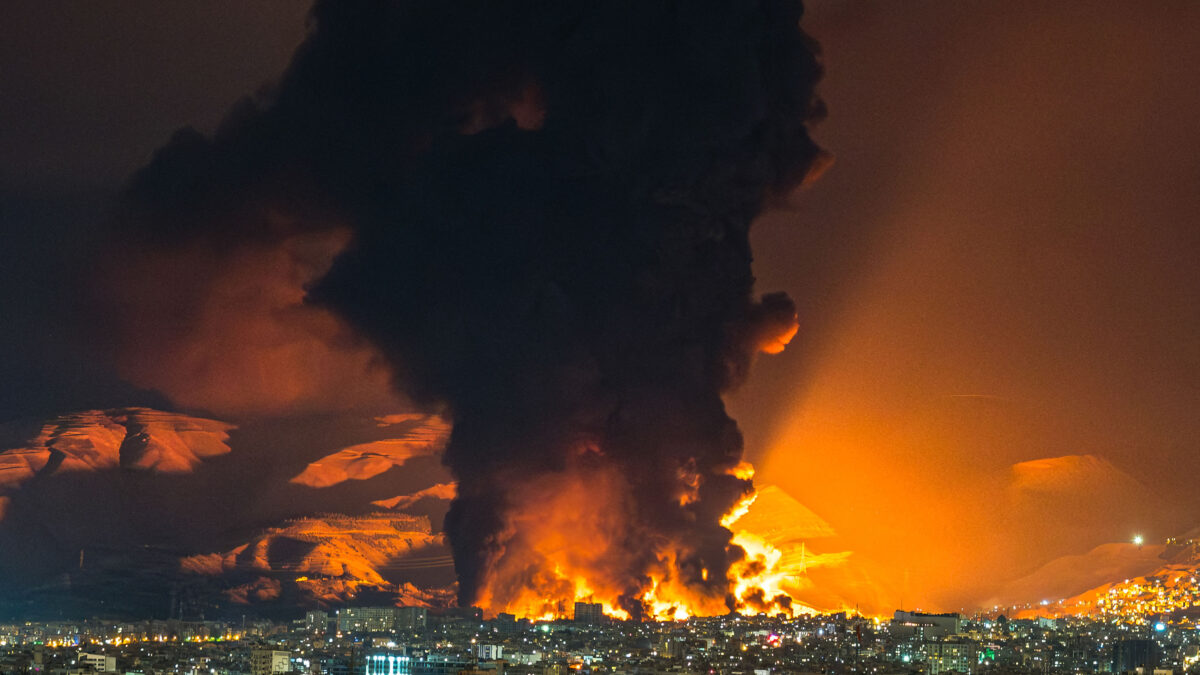
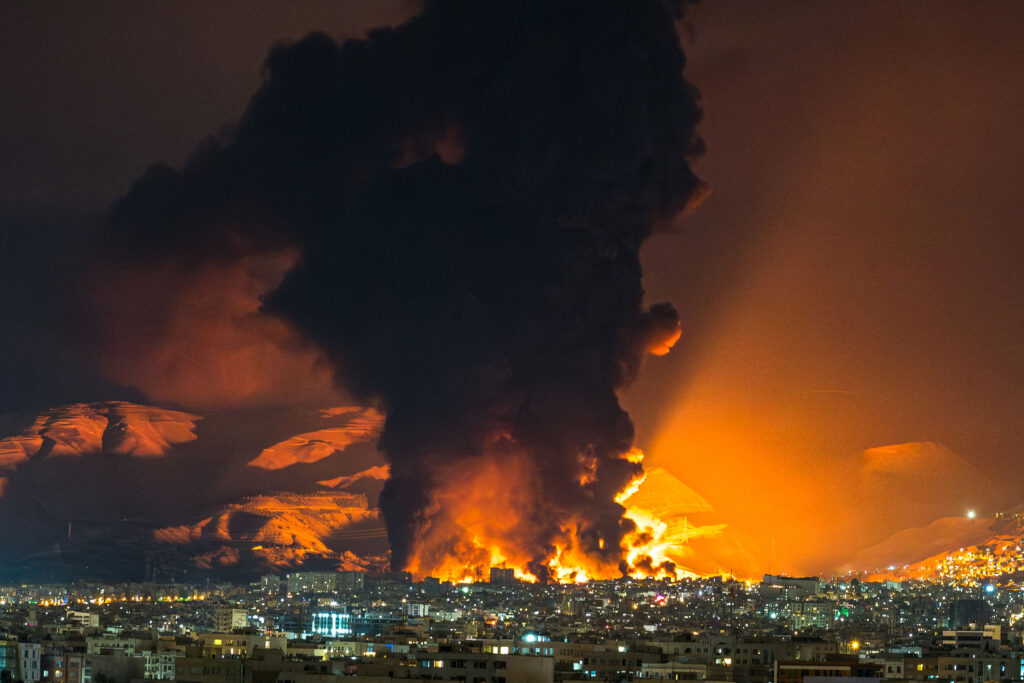
Smoke and flames rise at the site of airstrikes on an oil depot in Tehran on March 7, 2026. (Sasan/Middle East Images/AFP/Getty Images/TNS)
While many Iranians were just starting their day, Israel and the U.S. launched an unprecedented attack against targets across the country around 9:45-10 a.m. on Saturday, Feb. 28, assassinating Ayatollah Ali Khamenei, Iran’s supreme leader.
President Donald Trump has said the war could take 4-5 weeks and lead to many more soldiers dying. As of Sunday, 13 U.S. service members have been killed and many more have been injured, according to NPR.
Before these events, there were a lot of talks with Iran to investigate whether they had missiles, which they have repeatedly denied, with the energy plants being used for civilian use.
According to Timothy Hazen, a professor of political science at EU, the U.S. has been hostile with Iran since 1979.
“Ever since the revolution that ousted the Shah family, the Shah fled to America,” Hazen said. “It led to this Islamic Shia revolution, and the Shia clerics have been in place ever since. So there’s been no diplomatic relations between America and Iran since the 1979 Revolution.”
The first round of strikes from the U.S.-Israel coalition hit a school that amounted in over 160 killed, with many being children, resulting in worldwide concern about how the U.S. went about these strikes. However, the country still has many allies that have provided vocal support, including France and Britain.
“My reading is that Russia and China will give lip service, perhaps, to Iran, but will provide very little military or support otherwise,” Hazen explained. “I’m assuming that Russia and Iran would welcome the uncertainty, the chaos, the distraction, that Russia continues its policy approach with Ukraine, and China will also be perhaps okay with America being distracted, so to speak, so China can shift its focus to East Asia and the South China Sea.”
Another point of contention with these acts is the fact that there was no congressional approval for this act or declaration of war. Hazen noted that the U.S. has not formally declared war through Congress since World War II.
“But even though we’ve not formally declared war, we’ve been at war, right?” Hazen said. “So at this point, the formal constitutional mechanism of declaring war is becoming so outdated that it becomes perhaps irrelevant to how modern politics works.”
According to the Pentagon, this operation has already cost nearly $12 billion, and it will likely cost a lot more depending on when this operation ends. White House Press Secretary Karoline Leavitt has said that Trump could reopen a military draft, which has not been implemented since the Vietnam War.
“History would prove that oftentimes there is a rally-around-the-flag effect with wars. So one could point to perhaps a moment of Americans coming together,” Hazen noted. “History also suggests that there is an expiration date to that, and the longer that a war prolongs, the longer it goes, we will start to see public opinion shift.”