The Ever-Changing Motion of the Iran War
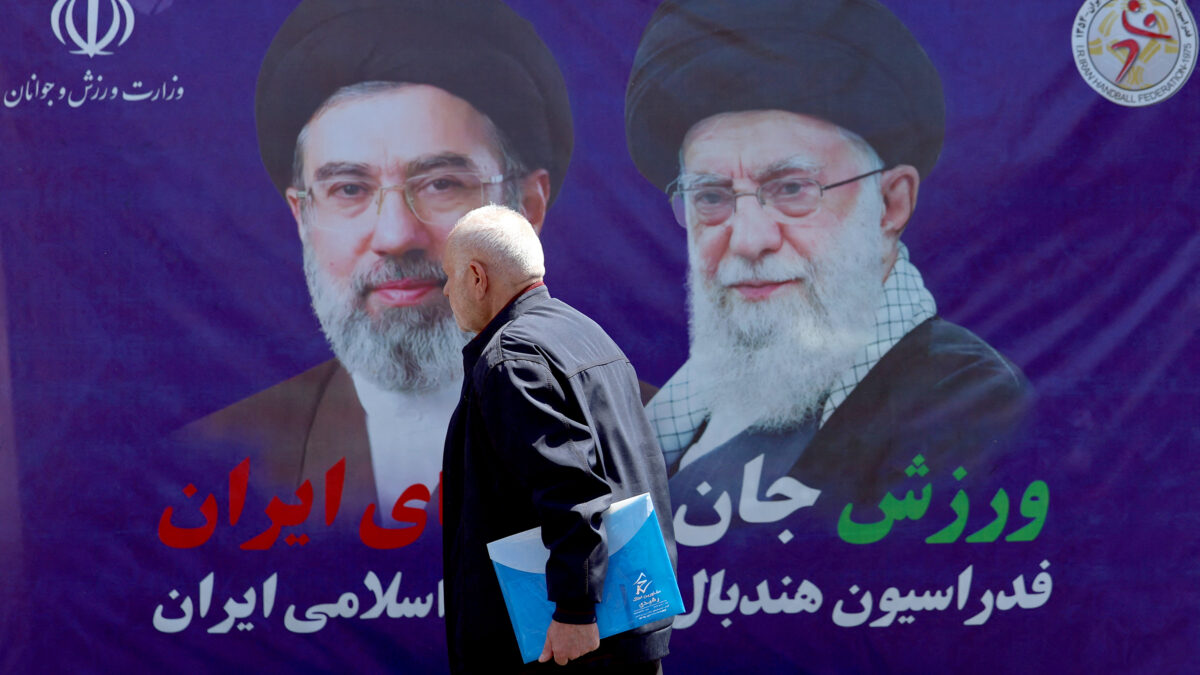
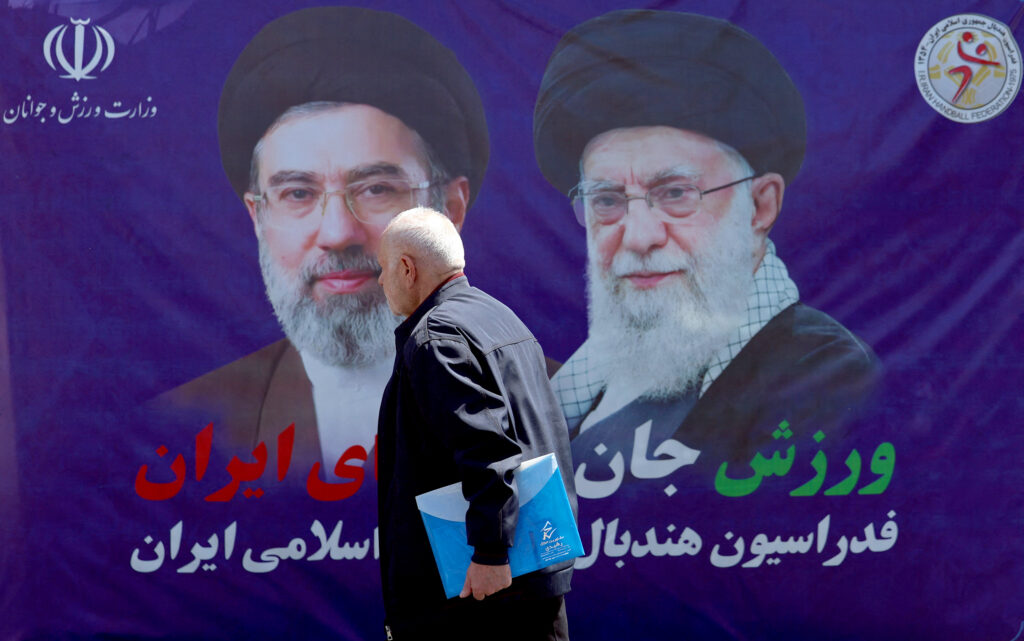
A man walks past a banner with pictures of Iran’s slain supreme leader Ayatollah Ali Khamenei (R) and his son and successor Mojtaba Khamenei, installed along a street in Tehran on April 15. (AFP/Getty Images/TNS)
For more than a month now, the war in Iran has been one of the most indispensable and ever-changing topics facing the world. Among the melee includes the death of former Supreme Leader of Iran Ayatollah Ali Khamenei, ceasefire talks, conflict over the Strait of Hormuz, the disappearance and discovery of a fighter jet, and a recent conflict in Lebanon.
On Feb. 28, at the age of 86, Khamenei was killed in a strike on the Iranian capital of Tehran launched by the U.S. and Israel to dismantle the Iranian government. The Iranian supreme leader’s reign came to an abrupt end after almost 37 years in power.
In this attack, Khamenei’s daughter, granddaughter, son-in-law, and daughter-in-law were killed alongside him. Since then, his son Mojtaba Khamenei has succeeded him as the new Ayatollah.
According to reports, Mojtaba Khamenei has received many facial scars and leg injuries from the missile strike that killed his father. Despite being the new leader, he hasn’t been seen publicly since then.
On Friday, April 3, an F-15E fighter jet was shot down over a mountainous terrain in southwest Iran. This is the first type of incident like this to occur in over 20 years.
The pilot was rescued on the day of the attack, but the weapons system officer went missing. The BBC reported that “Trump paused a number of other operations in Iran to focus on the rescue, directing dozens of special operations forces personnel to the effort.”
The missing soldier was found on Sunday, April 5. Trump announced this in a Truth Social post that morning, exclaiming that “the officer is now SAFE and SOUND!”
One of the prime reasons for this conflict is a blockade of the Strait of Hormuz, the waterway between Iran and the United Arab Emirates. A major reason for blockading the Strait is to disable Iran’s economy, as that is where they receive their main source of revenue, oil.
Coincidentally, 20% of the world’s oil supply comes from the strait, and gaining access could be beneficial for many countries globally. Rob Butler, professor and chair of the Elmhurst University department of history, said that “this affects many countries significantly. Blockades have commonly been used by any nation that thinks it can win the upper hand.”
So far, the blockade, which began on April 13, seems to be successful. The Associated Press reported on Thursday, April 16, that “the action could put serious pressure on the Iranian economy, while Tehran’s earlier cutoff of the waterway crucial to oil and gas supplies has sent energy prices higher during the war with the U.S. and Israel.”
Still, the continuity of this conflict remains complicated. On April 8, Israel attacked Lebanon in a dispute with Hezbollah. At least 250 militants were killed. However, Timothy Hazen, assistant professor of political science at EU, said conflict between these nations is nothing new.
“It’s helpful to understand this isn’t an isolated issue for these countries,” Hazen said. “The intensity has reached [levels] we haven’t seen previously recently, yet it is a 45-year conflict.”
As for when this conflict ends, that remains ambiguous. On April 15, Trump stated in an interview that the war is “very close to over.” Also, on April 16, Trump announced that Israel and Lebanon have agreed to a 10-day ceasefire.
The Middle Eastern conflict remains quite unpopular, with 53% opposing it and 34% showing support, according to a poll from The Economist and YouGov conducted April 3-6. EU political studies professor Scott Braam questioned whether “this says something about the media, or people are sick of these wars.” Nevertheless, the future of this dispute remains unknown.