Lollapalooza’s Origins: An “Underground” Festival That Never Really Was
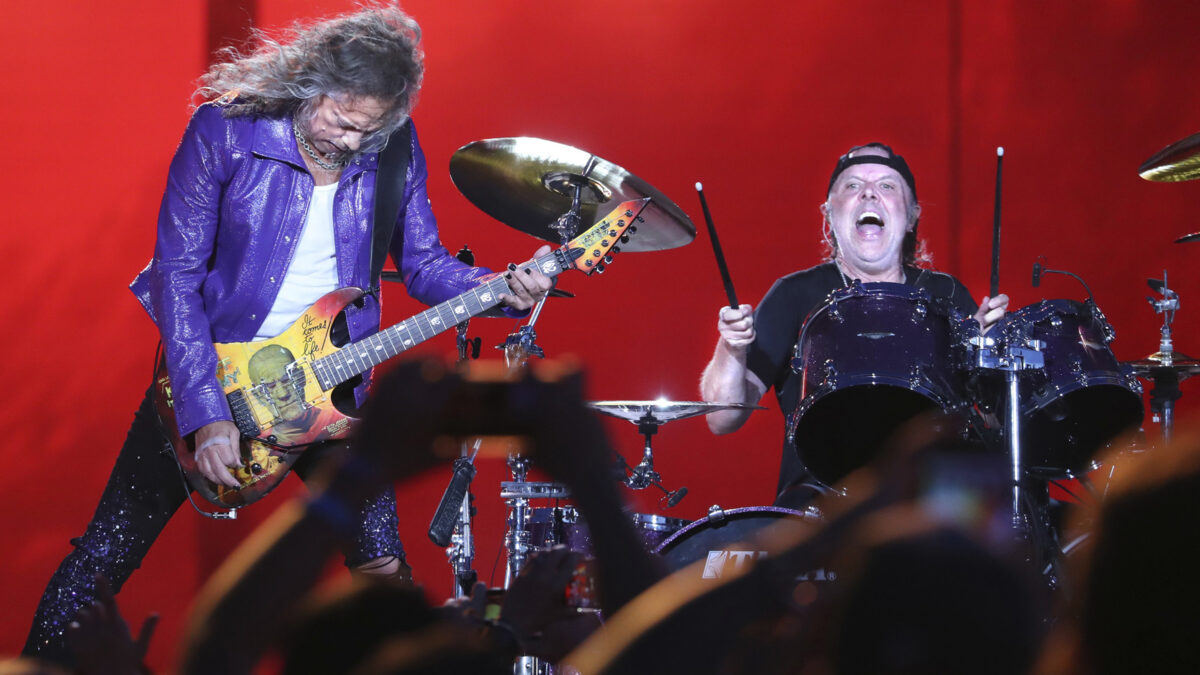
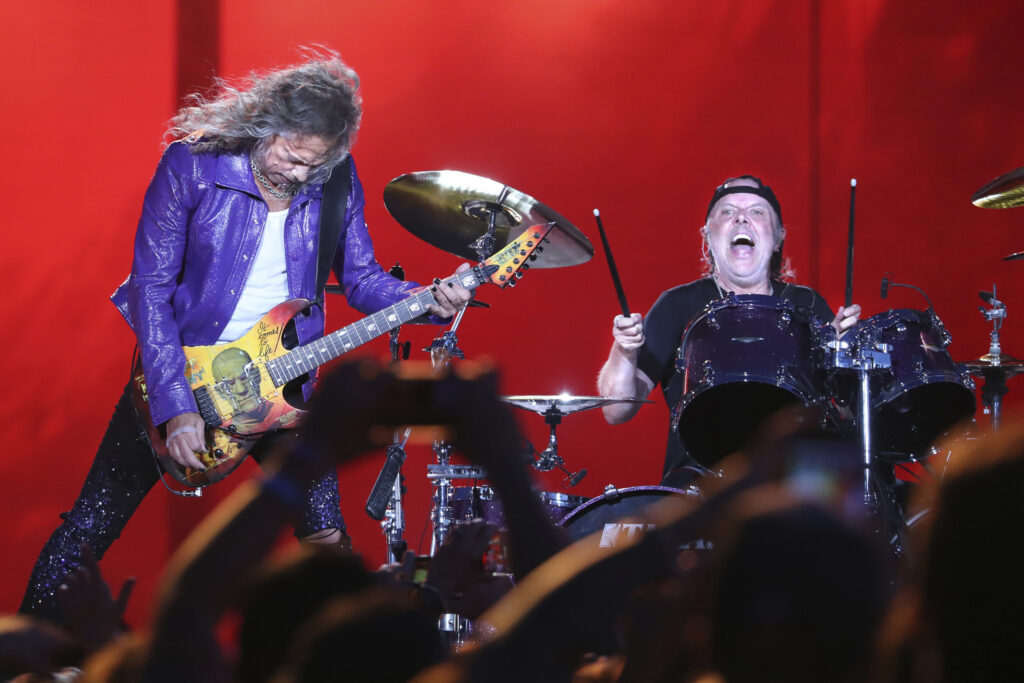
Metallica guitarist Kirk Hammett and drummer Lars Ulrich perform at the Lollapalooza music festival in Grant Park in Chicago on July 28, 2022. (Terrence Antonio James/Chicago Tribune/TNS)
Lollapalooza is one of the most legendary musical festivals in the world. Initially a touring festival, it has now become a single-weekend event in Chicago. Since then, questions have arisen: has it become the very thing it was created to oppose? Has an event that was initially organized and marketed as an alternative festival become a haven for popularity?
Lollapalooza began in 1991, founded by “Jane’s Addiction” frontman Perry Farrell. He initially created this festival as a farewell tour for his band. His goal was to bring a bunch of non-mainstream acts on a tour to oppose mainstream music. After the tours’ major success, and the rise of alternative music during this time, he decided to revive the tour with different acts each year throughout the 90’s.
Bands that would play in the years to follow include Red-Hot Chili Peppers, Soundgarden, Rage Against the Machine, and Tool. They were exactly what Farrell was looking for, alternative rock, just as alternative music as a whole became a staple for the 90’s musical landscape.
Controversy struck in the mid-90s when Metallica was selected to headline the 1996 tour. Farrell himself saw their mainstream success and aggressive sound as contrary to his festival’s message. This is despite a considerable amount of the alternative acts that played Lollapalooza found mainstream attention and incorporated sonic aggression.
As Lollapalooza’s success began to dwindle in the late 90’s, Farrell put his festival on hiatus. After an unsuccessful return attempt in 2003, a 2005 resurrection as a one-day event in Chicago, in a similar fashion to Coachella and Bonnaroo, took off. Since then, Lollapalooza has been an out-of-the-park success, with it eventually branching out as a one-day event to other countries, including Brazil, India, and Chile. In 2006 the event switched to a two day format, most recently expanding to four days in 2016.
Since becoming a single-weekend event, the controversy surrounding its evolution and appeal has been largely questioned. Lollapalooza has promoted and headlined major musical acts such as Lady Gaga, Miley Cyrus, Chance the Rapper, and Bruno Mars. Legacy alternative rock acts remain staples for this festival, yet mainstream pop stars are now the prime focus.
On March 17, Lollapalooza revealed its 2026 lineup. It will be taking place from July 30 to August 2 this year, in Grant Park, Chicago, where it has been held for the past 2 decades.
This year’s headliners include pop stars Charli XCX, Lorde, and Tate McRae alongside alt groups like The Smashing Pumpkins.
The last time Smashing Pumpkins headlined Lollapalooza was 1994. Nirvana was initially scheduled; however, after the death of frontman Kurt Cobain and the band’s subsequent breakup, the Pumpkins were moved up for that year’s tour.
As for the other headliners, Charli XCX performed in 2015, 2017, and 2022. Lorde previously performed in 2014 and was slated to perform in 2017, yet poor weather cancelled the performances that day. Tate McRae played in 2024.
The squad of artists that are selected for modern-day Lollapalooza, alongside its global and cultural success, have caused people to question whether it has evolved into the reverse of what it started as.
Revolver Magazine founder Tom Beaujour says, “The location festival is the new thing. Lollapalooza has created nostalgia for that because it does not exist anymore.”
Quite drastically, late music producer Steve Albini was critical of this franchise from the very beginning. In 1993, early on in the festival’s history, he called it “the worst example of corporate encroachment into what is supposed to be the underground.” Albini believes that Lollapalooza was always the opposite of what it represented.
With this evolution, it has been a speculative theory that in creating a festival full of niche artists, Farrell accidentally created something he never wanted to, a festival consumed by the masses.
Farrell himself stated, “It’s plain and clear: I had no idea that it was going to be this.” That said, he seems to accept Lollapalooza’s current situation.