EU School of Business Emphasizes Quality Learning, AI, for MBA Program
Elmhurst University seeks to streamline and modernize their Master of Business Administration (MBA) program, emphasizing artificial intelligence training and flexing their strengths in applied learning and close faculty support.
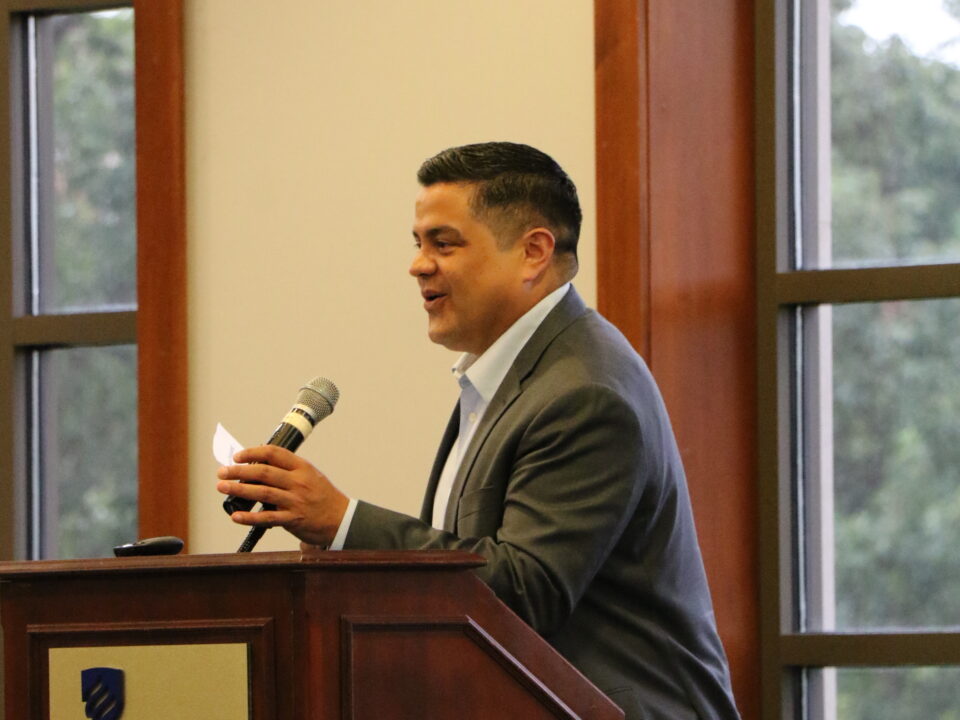
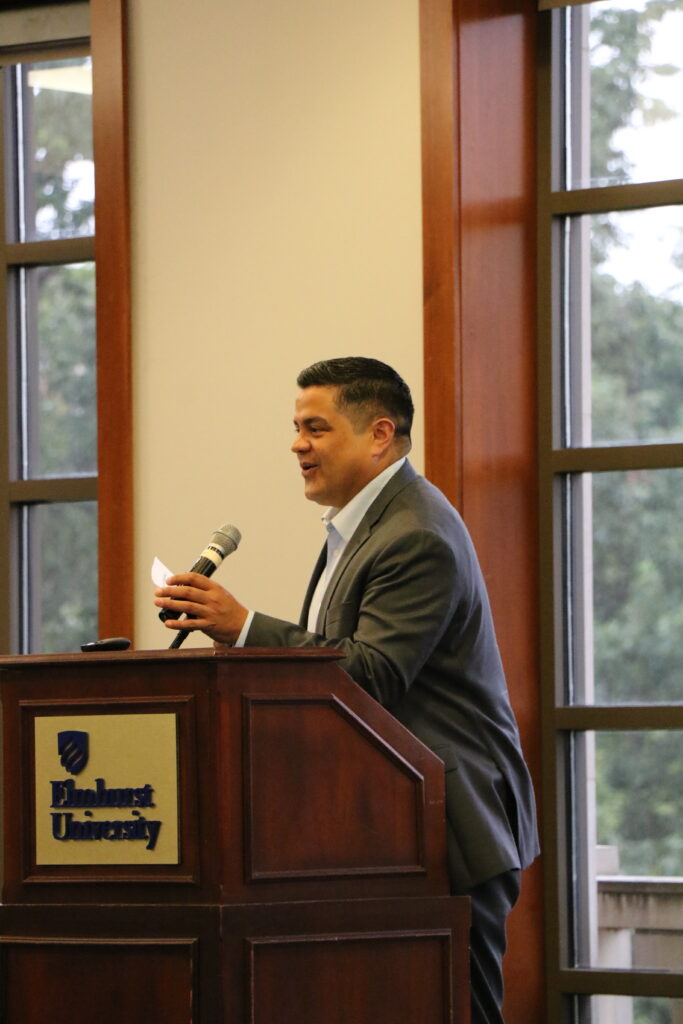
As programs in the Chicagoland area vie for new students amid a decrease in enrollment nationally, professor Lawrence Brown, head of EU’s MBA program, and Walter Salek, program director for EU’s supply chain master’s program, point out many of these strengths. Salek and Brown hope to build a graduate program with a more modern, realistic and personal approach compared to traditional MBA programs.
One of the biggest changes Brown highlighted is the MBA’s new STEM designation, which he said helps distinguish EU from many nearby competitors.
“Not all MBA programs in the immediate area have a STEM designation; we just got ours, so it’s hot right off the press,” Brown said.
Brown connected that shift to broader economic changes, arguing that students entering today’s workforce are seeking stronger, more qualitative, and more technical abilities than ever before.
The STEM direction is also closely tied to the program’s new focus on generative AI. Brown said the program is not treating AI as a side topic, but as something integrated directly into the coursework. In his view, AI should not simply replace tasks, but help students think more critically and work more effectively.
“The goal is not to further do more busy things,” Brown said. Instead, generative AI can “allow us to think more critically, and function more as a tool and as a thought partner.”
Salek expanded on that idea, describing how graduate business students are expected to use AI. He said EU is trying to teach students to work with technology thoughtfully rather than blindly depending on it.
“We’re trying to teach the students or give them the experience that they can use generative AI in their job better,” Salek said. He explained that assignments may involve “a red light, a yellow light, or a green light” system, where some assignments forbid AI, some allow limited use, where students are expected to explain how they used it, and others allow it to be fully implemented.
Both Brown and Salek also mentioned the emphasis on learning by doing. Brown said the MBA balances academic theory with modern application by embedding technology into traditional areas such as marketing, finance, and accounting. Students still learn core business principles, but they are also thinking about how to use tools in ways that make those principles more useful in practice.
Salek described the learning approach of the program simply: “The underlying philosophy is to learn by doing.” He said most of the work in the program focuses on solving problems rather than taking exams, with many assignments built around realistic business situations that students could later discuss in interviews, share on LinkedIn, or even bring back to their employers.
“We really don’t have exams in this program,” Salek said. “Probably 80% of your grade is based on solving problems and doing assignment work.”
Brown describes the MBA as a kind of “proving ground,” where students are encouraged to bring in real-world workplace questions, make mistakes in class, and sharpen their thinking before applying it on the job. He also pointed to live projects outside the organization as examples that help students gain practical experience through live-client work, which they can then apply directly in their careers.
Brown also emphasized that EU’s MBA stands out because of the way students are supported personally and professionally. The program follows a cohort model, meaning students move through six core classes together and build long-term relationships along the way. He also stressed the importance of faculty mentorship, saying professors do not see themselves as distant lecturers.
“We don’t consider ourselves to be a sage on the stage,” Brown said, explaining that much of his role involves coaching, training, and developing current students and alumni.
The personal approach may also connect to what students are getting out of the program. Brown said students are encouraged to “curate their MBA experience,” meaning they should think intentionally about where they want to be professionally 12 to 18 months after graduating and use the program to help get there.
Salek mentioned that graduate students are “seeking advancement.” He noted that 77% of graduating students in his program were promoted upon graduation, reinforcing the idea that EU’s graduate business education is closely tied to success and career mobility.
According to Brown and Salek, EU’s MBA program offers more than just another business degree. With its STEM designation, integrated AI focus, project-based learning, and close faculty-student connections, the MBA program helps students develop practical, up-to-date skills and build real career progress. For students or current employees weighing MBA options in the Chicagoland area, that combination may be what makes EU’s program stand out.
Those who want to learn more details about the program’s STEM/AI designation and a $2,500 scholarship opportunity can visit The Leader’s YouTube channel for a full video story.