Disappearing Plates Trigger Operational Shift to Disposables in Cafe
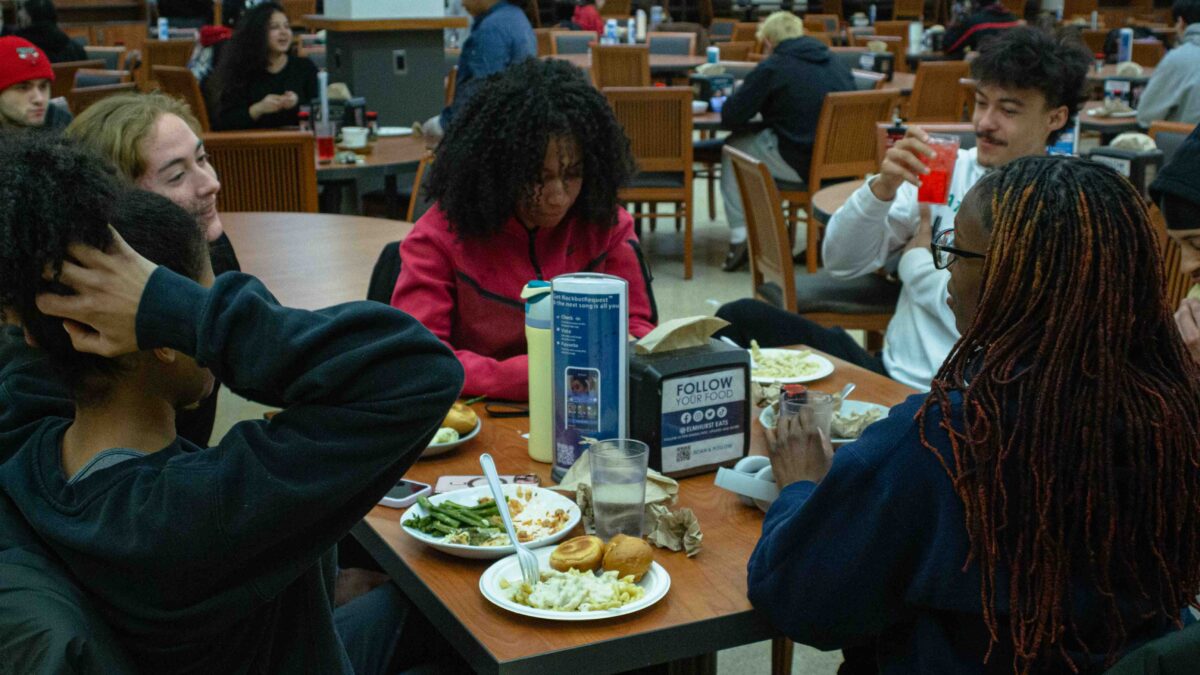
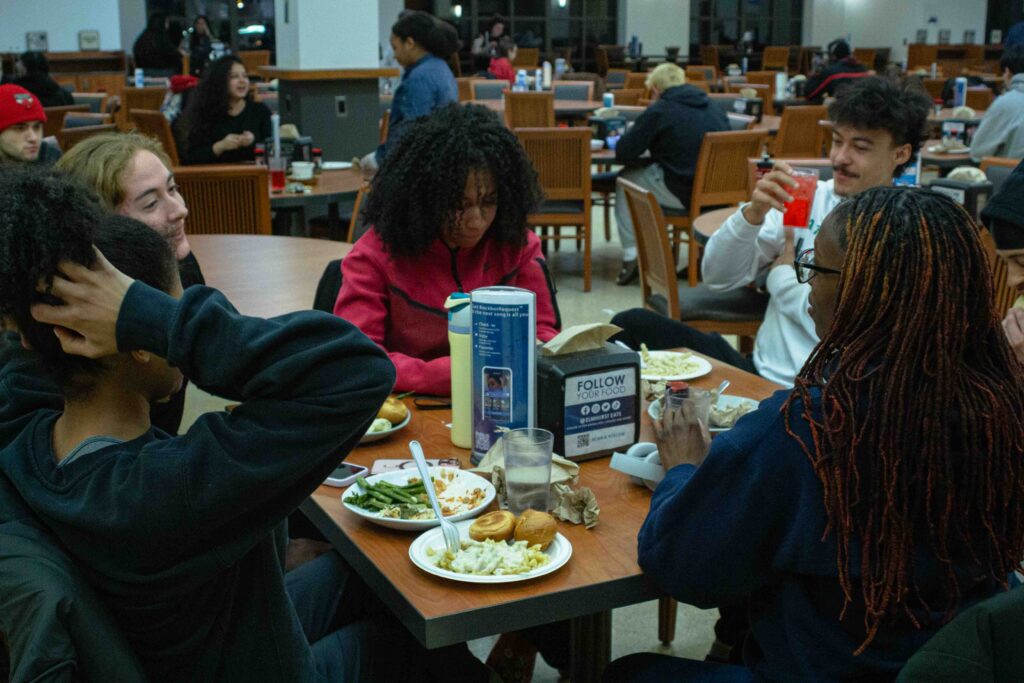
Students eat off a mixture of disposable and reusable plates in the main cafe on March 13. (Star Herring)
Tucked into the side of Elmhurst University’s cafeteria, junior Colin Rogers sits cutting his chicken and chow mein with a metal knife, bracing a flimsy paper plate with a plastic fork. Since late February, this mismatched table setting has become the new standard at EU, as the cafeteria’s reusable inventory has performed a disappearing act.
For EU juniors, Rogers and Madison Howard, the mystery behind the missing dishes was easy to solve. Howard noted that the dishes rarely make it back to the kitchen. “In the dorm lobbies, there is a bunch of stacked plates, and no one’s really doing anything about it. I’ve seen people drop them and break them.”
Besides dishes leaving the cafeteria, Rogers comments that “I think a big thing is the garbage cans, I think people actually throw them away. I have thrown a couple of forks away, evidently, and it’s hard to go fishing for them.”
Rogers was blunt when asked why the dishes don’t make the return trip from dorms: “Pure laziness and just forgetting to bring it back.” Both Rogers and Howard agreed that the layout of the cafeteria is a part of the problem.
“The current return area for dishes is small and overcrowded,” Rogers said. “I just wish there was more space somewhere, I see it a lot of times, stacked up plates and then there’s really nowhere to put them.”
According to Elizabeth Walters, Chartwells Marketing Manager, the situation reached a breaking point in late February.
“Our team reached a point where we no longer had enough plates, bowls, and silverware to consistently make it through an entire meal period,” Walters explained. “We had to make a quick operational decision. Rather than risk running out of dishes during service, we temporarily introduced disposable ones.”
While Chartwells planned for typical loss and replacement rates based on data from peer universities, the actual rate of disappearance this semester exceeded those projections. Despite the additional orders throughout the year, the inventory couldn’t keep up with the new “all-you-can-eat” plan that was implemented.
This recent switch to paper and plastic over ceramic affects more than just the aesthetics of the cafe; it’s a sustainability issue as well. Walters acknowledges that the reliance on disposables contributes to higher waste volumes.
The change hasn’t impacted staffing for the cafeteria operations. “There has been no reduction in hours to any of our staff,” says Walters. “Dishwashing and utility teams have shifted their focus to supporting catering equipment, trash removal, and behind-the-scenes culinary production.”
The transition to disposable dishware has not been popular among students. Many find the disposable options functional but frustrating. Rogers explains this: “Yeah, I’m definitely not a fan. There are the thin plates, and I just get annoyed by them. It ruins my initial experience because they bleed through.”
“Just the other day, I had the sauce on my hands, and I had to double up on plates. Not that big of a deal, but just kind of annoying.”
Walters notes that Chartwells doesn’t want to have to play dish police. Penalties for students are not under consideration. Instead, the focus is on having an “amnesty” approach, encouraging returns through incentives and awareness campaigns.
This issue with having confusing dish drop-off areas and disappearing utensils doesn’t seem to be a universal issue in higher ed. Rogers argues this by sharing: “I’ve gone to other schools where they have a conveyor belt where you drop dishes off, and it goes around. Just like that, students always know where to put their dishes.”
This raises the issue of why EU is having such a difficult time implementing a successful system. Rogers questions this: “If you look at any other university that has reusable dishes, they make it work somehow.”
Students like Howard and Rogers believe the solution lies in making the return process as easy as the “theft.” “They should have places around campus where you can place plates, and they collect them,” suggests Howard. “A lot of the time you’re on the go.”
Rogers notes that more communication from the university would go a long way. “Maybe a little transparency would be nice. Just saying, ‘Hey, this is why this is happening.’”
Walter frames a promise from Chartwells that “We remain committed to finding solutions that support sustainability, keep dining costs manageable, and maintain the dining experience students expect.”