Trump’s New Ballroom Continues a Centuries-Long String of White House Changes
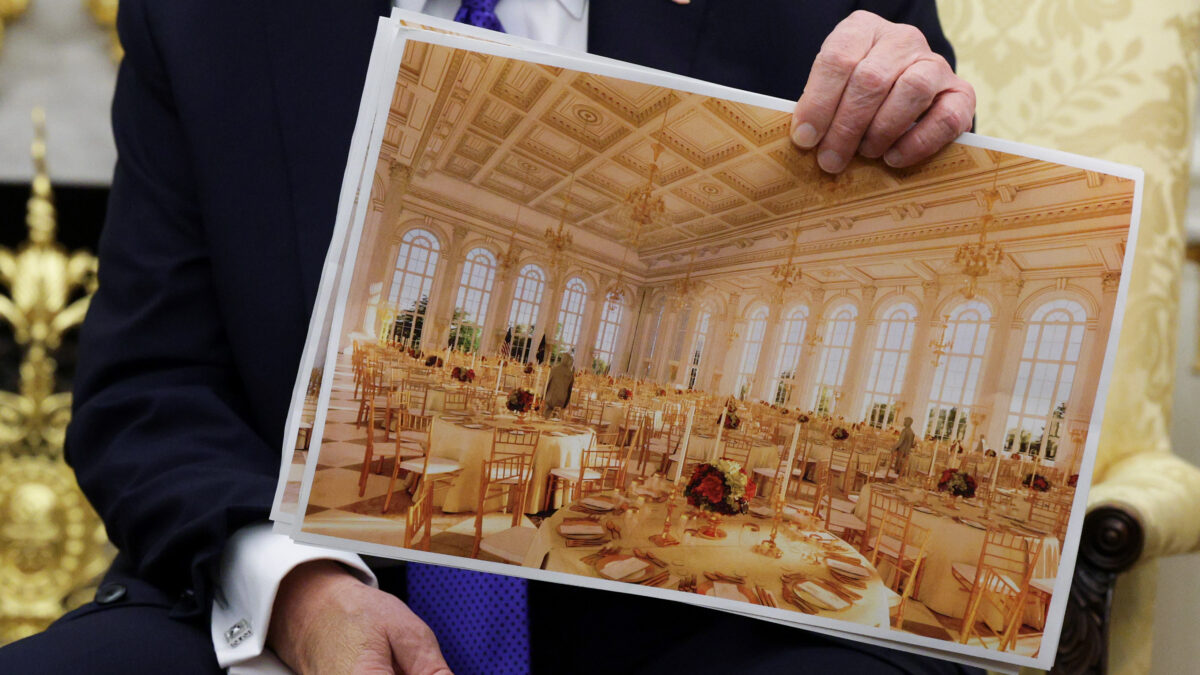
U.S. President Donald Trump displays a rendering of his proposed White House ballroom on Oct. 22, 2025, in Washington, D.C. (PC: Alex Wong/Getty Images/TNS)
On July 31, the White House announced plans for adding a ballroom, estimated to take up 90,000 square feet and have a seated capacity of 650 people. The ballroom will replace the East Wing, which was renovated and changed many times since its construction in 1902, with a second story being added in 1942.
President Donald Trump selected Washington, D.C.-based McCrery Architects as lead architect. Additionally, Clark Construction will head the construction team, while AECOM will lead the engineering team.
The $200 million structure is funded by Trump and other donors. The U.S. Secret Service will provide security modifications and enhancements.
“The White House is one of the most beautiful and historic buildings in the world, yet the White House is currently unable to host major functions honoring world leaders and other countries without having to install a large and unsightly tent approximately 100 yards away from the main building entrance,” reads the White House’s July press release.
Sitting presidents have been making major and minor changes to the White House for centuries since its construction began in 1792, according to PBS.
Theodore Roosevelt added the West Wing to create dedicated space for the president and key staff. Roosevelt’s fifth cousin, Franklin Delano Roosevelt, later put in the East Wing.
From 1948 to 1952, Harry S. Truman tore down the White House interior after the building was declared structurally unsound. Other changes have included John F. Kennedy’s addition of the Rose Garden and Richard Nixon’s conversion of FDR’s indoor swimming pool into a workspace for the White House press corps.
Trump’s ballroom is not his first major change to the White House during his second term. This all started in January, with multiple features being added to the White House since then.
First, the Oval Office was decorated with frames and shiny details. Then the Rose Garden was converted into a stone-covered patio. Additionally, an exterior wall was decorated with portraits of every president except Joe Biden, Trump’s predecessor.
There has been a lot of concern from the public due to the just-ended government shutdown, which began on Oct. 1 and has since become the longest government shutdown in U.S. history. Many wondered where the money for the ballroom would come from during the shutdown.
In an interview with PBS, Priya Jain, chair of the Heritage Preservation Committee at the Society of Architectural Historians, said communication about how the ballroom project would affect the main structure of the building was confusing from the beginning.
The project began in September 2025. The White House has said that construction will complete before Trump’s term finishes in January 2029.