Chicagoland Residents Fear for their Families and Communities Amid Increased ICE Activity
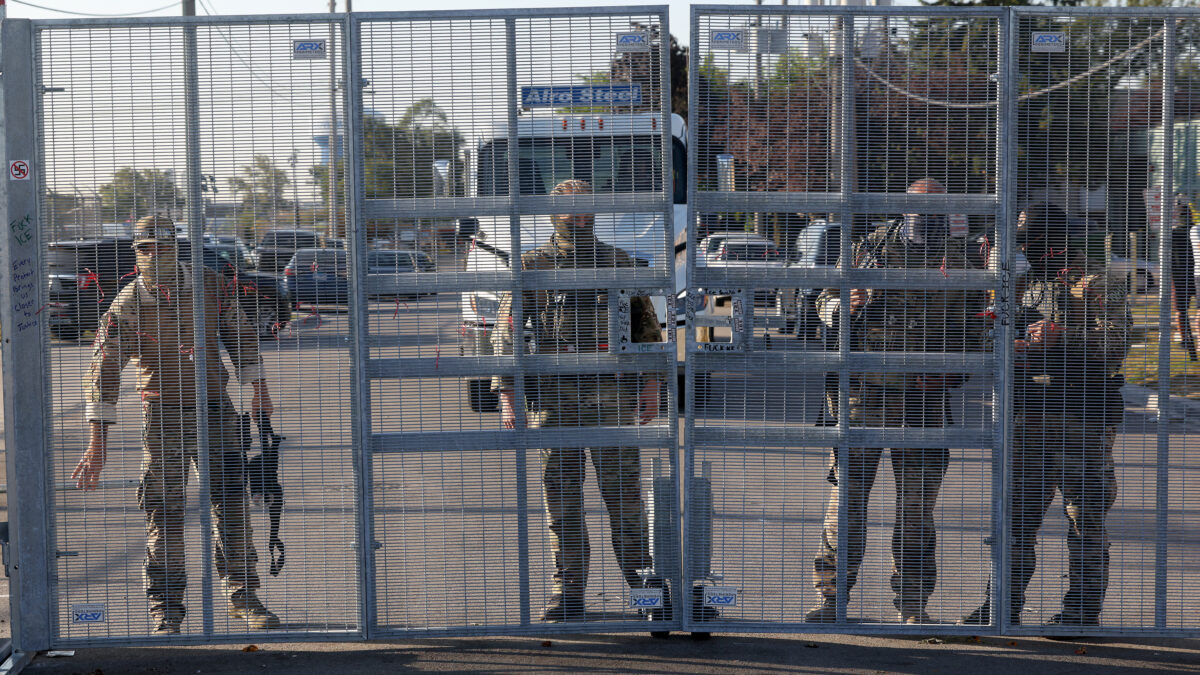

Federal agents outside the U.S. Immigration and Customs Enforcement holding facility in Broadview, Illinois, on Sept. 30. The Broadview facility has served as a hub of operations for ICE in Chicagoland. (PC: Antonio Perez/Chicago Tribune/TNS)
The Department of Homeland Security (DHS) claims that U.S. Immigration and Customs Enforcement (ICE) has launched Operation Midway Blitz to “target criminal illegal aliens terrorizing Americans in Sanctuary Illinois,” in honor of Katie Abraham, a victim of a drunk-driving hit-and-run.
The DHS claims that ICE has arrested over 1,500 undocumented people. And, according to the National Public Radio (NPR) affiliate WBEZ Chicago, President Donald Trump’s claims of arresting criminals are not supported by any decisive results. The operation began on Sept. 8 and escalated quickly.
Silverio Villegas González, a 38-year-old father of two young children, was fatally shot on Sept. 12 by an ICE agent in Franklin Park, according to Reuters. He had just dropped his children off at school.
Protesters quickly organized, peacefully demonstrating throughout downtown Chicago and even through some suburbs, according to WBEZ Chicago. They were met with tear gas and pepper spray from ICE and Border Patrol.
I spoke with two members of our Chicagoland community who are currently being affected by the strong presence of ICE and Border Patrol. They wanted to share their stories but remain anonymous.
A single mother of three currently lives in Illinois, undocumented.
“I came to the U.S, Illinois, more than 20 years ago. I wanted to build a better life for myself,” said the woman, whose children were all born in the U.S. “When my oldest son turns 21 he can sponsor me so I can get a green card and become a citizen like my kids.”
But with the increase of ICE in her neighborhood, she fears that her dream of citizenship may not happen.
“I worry that I won’t be able to get citizenship,” she said. “I’ve waited a long time, my son isn’t very close to 21, I’m scared that [ICE will] take me before I can.”
In September, she had a close call.
“My friends warned me that ICE was all over our neighborhood, they were very close to my home,” she said. “I couldn’t leave work, I was scared they would pull me over, or take me when I got home. I told my kids to stay inside and not answer the door.” She spent hours waiting at work hoping they would leave the area.
“I thought about what would happen if they took me, to my kids, who would watch them. I tried telling them that we would just go back to Mexico now and together,” she said with a laugh. “My youngest son cried so hard when I told him this. He cried and screamed that he wouldn’t go, no matter what. He doesn’t want to leave his school or his friends.”
“I fear the idea that I could be taken alone and lose my kids, and not know where they are,” she added. “I don’t want to be separated from them.”
She has worked since she first set foot in the U.S., and she pays taxes, follows the law, and has no criminal record — not even a parking ticket. She just wants a bright future for her children.
Another Chicagoland resident — a young father who, within the last couple of years, came from Colombia to Illinois — said he’s just trying to support his family. He left behind his aging parents and young daughter, and his only wish is to provide for them so that they may live comfortably back home.
“I don’t want to be here,” he said. “I miss my parents, I miss my country. I just want to work for a couple more years and save enough money so that I can build a comfortable life for them. I’m depressed being here, all I do is work everyday, all day. Two very exhausting jobs. I barely sleep anymore.”
He holds a green card and a Social Security number and has no criminal record. He is working with immigration lawyers to obtain citizenship.
“I’m working, I pay taxes, I just want to make a living,” he said. “I miss my daughter, she’s the main reason I work this hard. She’s the main reason I endure the loneliness of being here on my own, and the tiredness I feel.”
“I call my family almost every day,” he added. “Seeing them through my phone makes it hurt more sometimes, it’s hard being far from them, but this is the only way I can take care of them. My family keeps me going, the idea of being able to go back to them eventually. When things get too hard, which happens every day, God helps me keep my head up.”