Elmhurst University hosts Michelle Duster for guest lecture
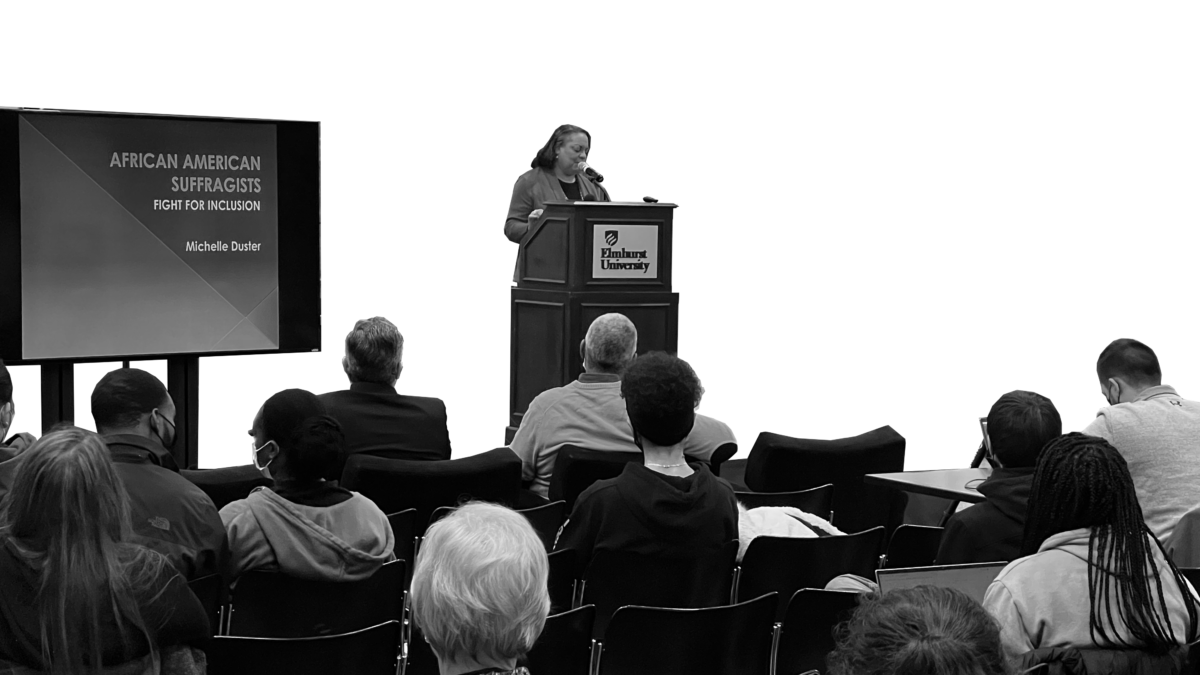
“It is a fight to be recognized for the contributions that we have made, to be recognized and celebrated for the achievements that we have made, and the obstacles we have overcome,” said guest lecturer Michelle Duster. “When I say ‘we’ I am talking about Black women.”
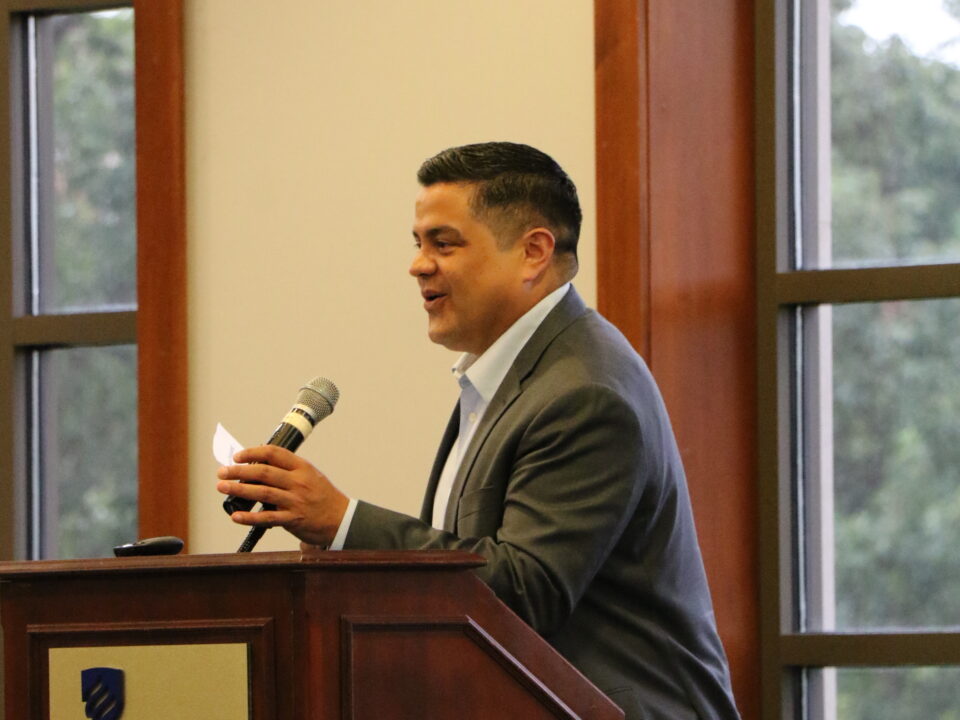
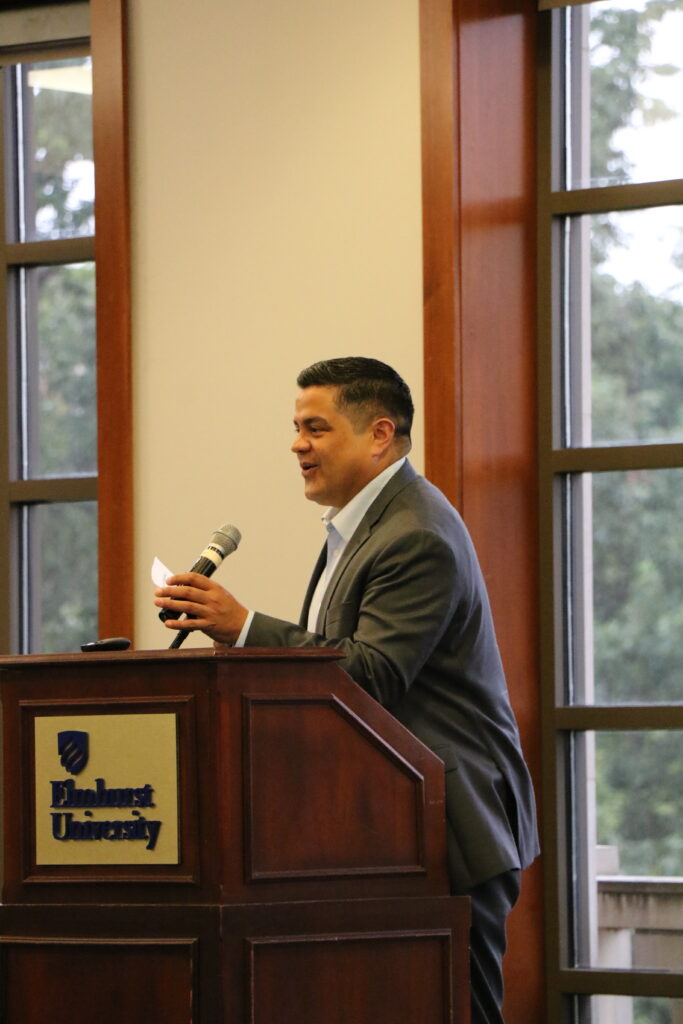
On Feb.16, Michelle Duster, great-grandchild of famous African American suffragist Ida B. Wells, spoke as the guest lecturer for the annual Martin Luther King Jr. lecture at Elmhurst University.
Duster is an author, professor, public historian, and champion of racial and gender equality. Having written books such as “Ida B. the Queen: The Extraordinary Life and Legacy of Ida B. Wells” and “Impact: Personal Portraits of Activism,” Duster continues her great-grandmother’s legacy in many ways.
Starting off the lecture, the president of EU’s Black Student Union, Raven Rhone, gave the audience a chilling question to ponder: “What is a dream?”
Following Rhone was EU English professor Janice Tuck Lively, who told the audience typical customs and questions you may go through if you were to head down south. These questions included “Where are you from?” “What church did you belong to?” and “Who are your people?”
As Duster took the stage, all eyes were on her, eager to learn about the legacy of her great-grandmother.
“We’ve come a long way since my great-grandmother’s day,” Duster said at the start of her lecture, “but we still have a long way to go, unfortunately.”
We were given a very brief history of the suffragist movement. As implied by Duster, not all could be covered in the short time given.
After a brief introduction of the movement and her great-grandmother, Duster told us how erased women of color in the suffragist movement have been. Slowly, there is a change being made to be more inclusive.
In 1913, Illinois allowed all women the right to vote. However, African American women were not granted the right to vote across the whole nation until 1965, almost 50 years after the 19th Amendment was passed.
After learning about the suffragist movement, Duster moved us to learn about all the monuments and murals that represent the suffragist movement, and how there still is a lack of diversity in these monuments for women of color.
“Ida B. Wells Drive was the first [and] only street in downtown Chicago named after any woman or any person of color. It’s 2022 folks,” said Duster above a round of applause. “And there still is only one.”