Derrick Harkins talks political integration of faith communities
Graphic by Hannah Horn
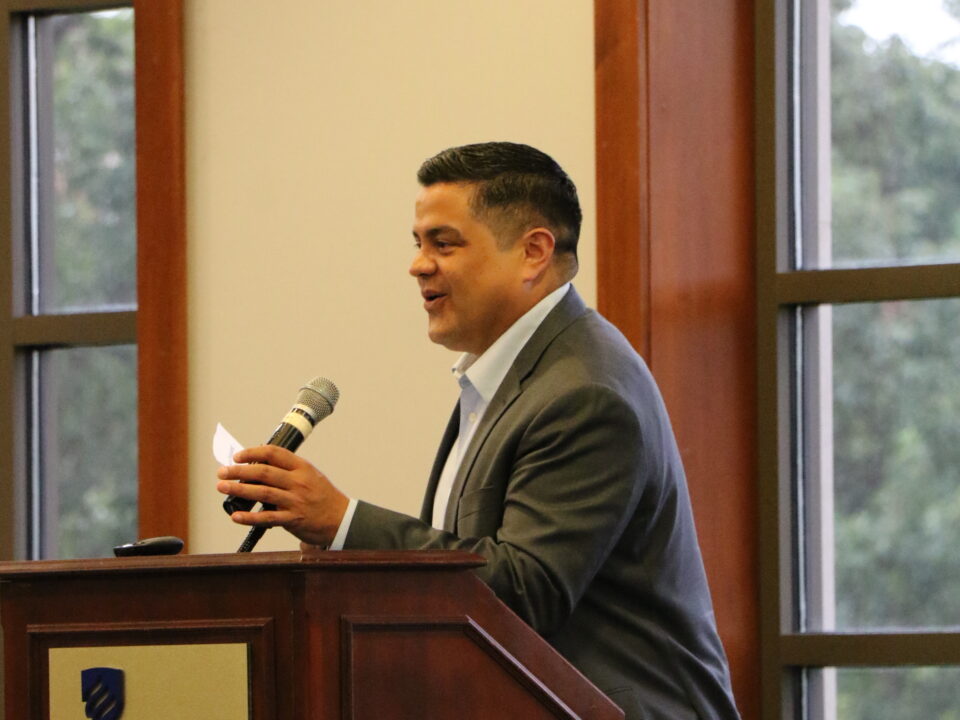
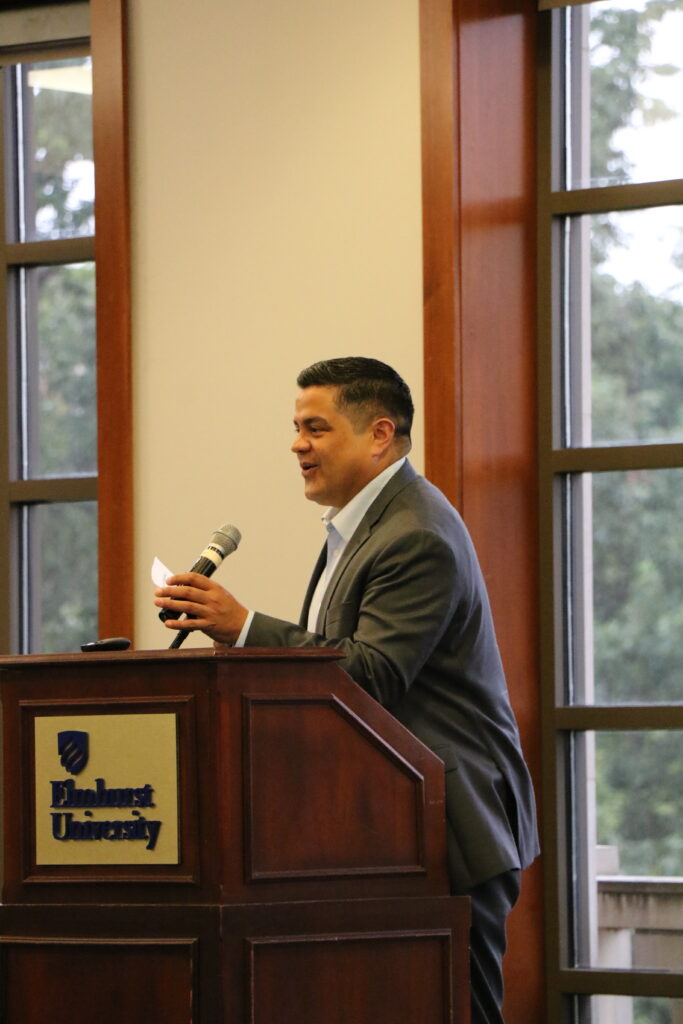
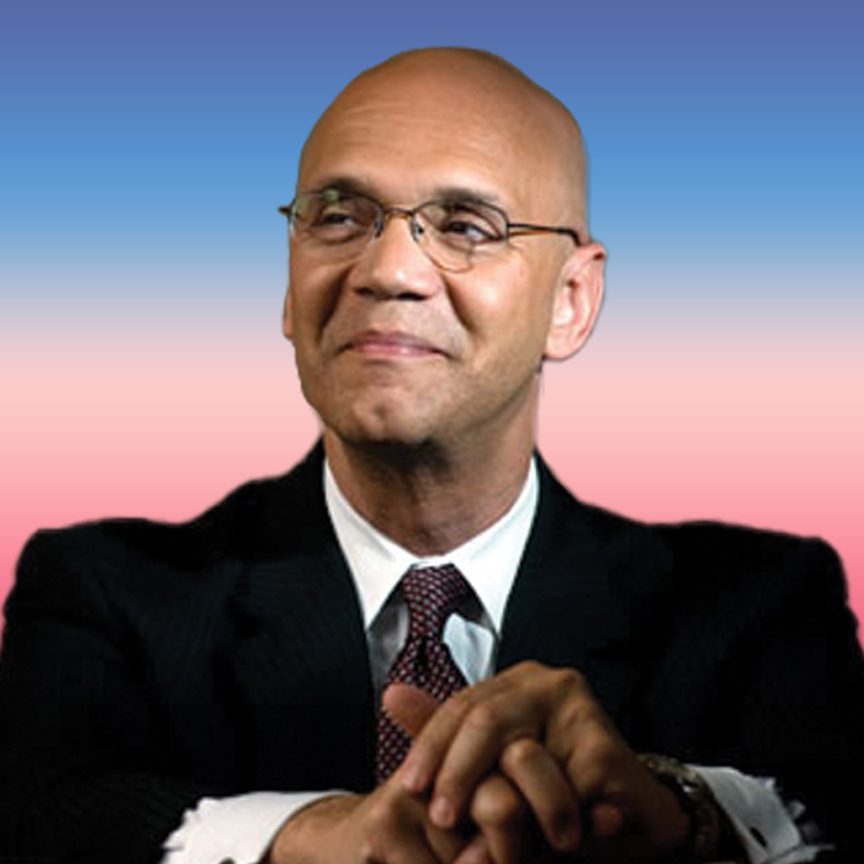
At a virtual lecture sponsored by the university chaplain’s office, Derrick Harkins, director of interfaith outreach for the Democratic National Committee, discussed the implications of shifting racial and religious demographics in the U.S. “People have bought into the idea that transition means the full disruption of life as some know it,” he said.
Harkins noted that the American population is projected to become majority-nonwhite by 2050. Rising diversity within the country is an indubitably positive driving force for social change, he continued. “It just allows for us to be that much stronger as a nation.”
“There is a persistence of hopefulness,” he emphasized when recalling his time acting as an advisor on faith-related issues for the Obama and Biden administrations. “In the space of these not even 20 years, we have had an African American president. We now have an African American, South Asian, Caribbean vice president.”
Harkins recognized that, despite the progress, there remains a tangible need to continue enhancing the inclusion of minority voices in government leadership. “The measure of success doesn’t necessarily come in instantaneous, microwavable time slots.”
As the vice president of Union Theological Seminary located in New York City, Harkins has been able to establish partnerships with members of the surrounding community, including Buddhist organizations, such as the Brooklyn Zen Center. “We only do ourselves fuller justice when we recognize that this is a part of the larger conversation,” he said, referring to his work in organizing interfaith dialogue.
Reaching across party lines is central to Harkin’s objective of cultivating a democratic and interreligious understanding of the American identity. “We were scant in their politics,” Harkin mentioned of his time spent engaging with young adult Mormons. “Believe it or not, we had conversations with them about the importance of moral forthrightness and how that unfolded in public life.”
In 2001, the Office of Faith-based and Neighborhood Partnerships was founded by John DiIulio under the presidency of George W. Bush (and later reinstated by President Biden). “We met with them with great anticipation for what could happen even though you know I came from obviously a very diametrically different place,” he said.
“We can disagree and still love each other unless your disagreement is rooted in my oppression and denial of my humanity and right to exist,” Harkins stressed.
Merging diverse communities with political affairs is pertinent and is driven by prominent figures like Jagmeet Singh, a member of the Canadian parliament who openly identifies as Sikh, as Harkins explained. Maggie Siddiqi, director at the Center of American Progress, is similarly involved with relating the perspectives of Muslim Americans to policy analysis.
Unprecedented levels of political polarization in recent years have been accompanied by extreme and discriminatory rhetoric directed at marginalized groups.
Harkins referenced the increase of attacks against Asian Americans during the pandemic and underscored the importance of unity in the aftermath of such unfortunate violence. “We respond to those kind of issues by broadening our sense of what is the understood reality that we live in,” he stated.
Individuals can make an effort to take notice of and participate in the long-standing struggle to relieve social inequities. “It may not be the broad sweeping changes that change the headlines of the New York Times, but it makes a difference,” Harkins stated.. “I think that that ideal exists. We have to do that work.”