Brackets, Bets and the Madness In Between
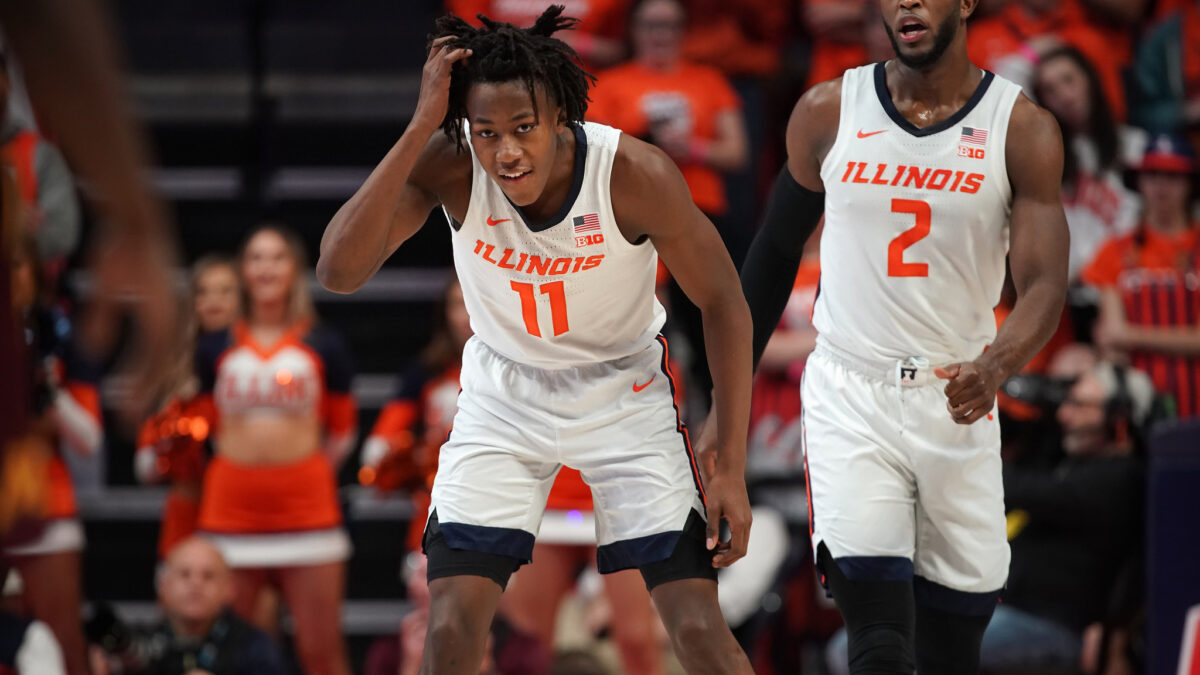
Ayo Dosunmu gets set on defense during a January game for Illinois. (E. Jason Wambsgans/Chicago Tribune/TNS)
Every year during March, the same rituals unfold across college campuses. Lecture halls grow quieter, libraries fill with students pretending to study, and laptop screens light up everywhere with buzzer beaters, Cinderella runs, and shattered brackets on the first day.
March Madness isn’t just a basketball tournament; it’s a shared national tradition.
However, there has been a shift in how students engage with games. Filling out a Madness bracket used to be the ultimate badge of participation, a low stakes prediction of gut instinct and blind loyalty to certain schools. Now, for many, it’s only the beginning.
Sports gambling has embedded itself into the craziness of March Madness culture. With betting apps like FanDuel and DraftKings just a download away, the tournament has become more than a spectacle; it’s become a marketplace of odds, payouts, and parlays. Sure, there might be some emotional investment in a team like Iowa State or the Fighting Illini, but the financial stakes ride on every single possession.
For some, this might add excitement. A lesser known school going up against a bigger school that once might have gone completely unnoticed now feels a lot more electric with money on the line. Combined with the tournament’s unpredictability, betting culture creates chaos that affects both brackets and bettors. The stakes are even higher for student athletes, as they also butt heads with the integrity of the game.
However, there’s a more complicated side to this shift.
The accessibility of sports betting raises questions about where the line is drawn between enthusiasm and actual risk. College students, many of whom are trying to balance their expenses for the first time, are particularly vulnerable to the attractiveness of quick wins and payouts. This unpredictability is what makes March Madness special, but also dangerous for sports bettors.
Upsets aren’t just fun. They’re frequent, but they rarely follow basketball logic.
Then there’s the psychological toll. A missed free throw in the final seconds of a matchup used to only sting, but now it feels personal to fans. A boundary between enjoying the game and needing a certain outcome can blur quickly, changing the way people enjoy sports altogether.
Universities and athletic organizations have started to take notice. Conversations and campaigns around responsible gambling have started to become more common. However, they struggle to keep up with the rapid and constant growth of the sports industry.
Still, the core of March Madness remains intact. It’s in the overlooked underdog stories, last minute game winning shots, and the cheers of millions nationwide repping their alma mater. Betting may amplify the highs and lows, but it surely doesn’t create them.
March Madness is all about unpredictability. Whether you’re chasing a perfect bracket, a winning parlay, or just the thrill of the game, the challenge for this generation of sports fans is knowing how to embrace the chaos without letting it take control.
Because long after the confetti falls and the champions are crowned, the question isn’t who won, but how we chose to follow along.