What $400 Hair Extensions Say About the Effects of Media
I cut my hair when Tears of the Kingdom was released because I was inspired by Zelda’s cute bob. Later that year, I watched “Game of Thrones” and spent $400 on hair extensions to have long wavy hair like Cersei Lannister.
I started drinking dirty soda after “The Secret Lives of Mormon Wives” made it go viral on TikTok. “Legally Blonde” and “Clueless” both have female main characters with autistic traits, and they helped me accept myself as an autistic woman. Romance novels have taught me what to look for in a man.
When a piece of media influences our thoughts and feelings, it’s doing its job correctly.
I distributed a survey asking Elmhurst University students how the media has affected them. Out of the 20 participants, 55% bought a product that an influencer, celebrity, or online creator recommended, and 85% of participants said that the media influenced a small decision they made.
Every single participant said they’ve learned a life lesson from a movie or show, and that they’ve taken in a piece of media that stayed with them for a while.
Thirty-five percent answered that they have changed their appearance to look like a celebrity, an influencer, or a fictional character they admired.
These results show that the media has a huge influence on trivial matters for some people, but what about more important things?
Eighty-five percent of students answered that they have learned a negative stereotype about a group of people from the media, and 75% said that they had to unlearn that stereotype.
From a political standpoint, 45% said they considered a candidate, cause, or political issue differently after hearing a celebrity or content creator discuss it.
These results should not come as a surprise, but if all of this can be true — if the media influences where people spend their money, how they see certain groups of people, and even their political opinions — we’re right to assume that misogyny in the media has the same effect.
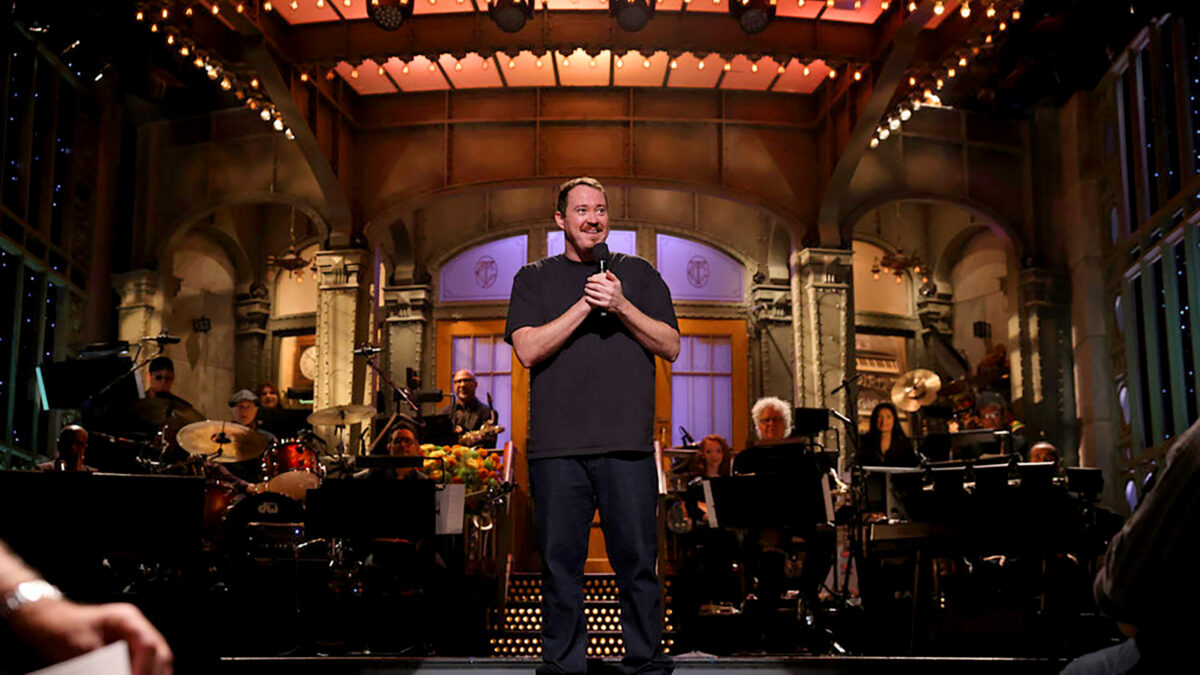
On “Saturday Night Live” on Oct. 10, Shane Gillis went on a long rant about women at the gym.
“I hadn’t been to the gym in so long. I didn’t know women just dress like whores now,” Gillis said on air. “Look, I’m sorry, there’s no other way to describe [it]. Have you seen it? I’ve seen it. You’ve seen the shorts? They’re those neon, like, artificial bait-colored [shorts], and the wrinkles go around the cheeks and all combine at the butthole. And don’t look! You’re not allowed to look.”
Both men and women flocked to social media to share their opinions. A lot of men argued that it wasn’t that deep, and that comedy is supposed to push boundaries.
But, in my survey, 100% of participants said that they’ve picked up slang, slogans, or sayings from the media they consume.
Calling a woman a whore is derogatory, and a set like this normalizes that kind of language. After watching, a man might think it’s okay to call a woman a whore as a joke.
Gillis’ rant also desensitizes us to rape culture in the media.
No, he wasn’t joking about raping a woman, but saying that women who dress provocatively are essentially bait implies that they’re asking for male attention. His monologue could very well contribute to sexual harassment at the gym.
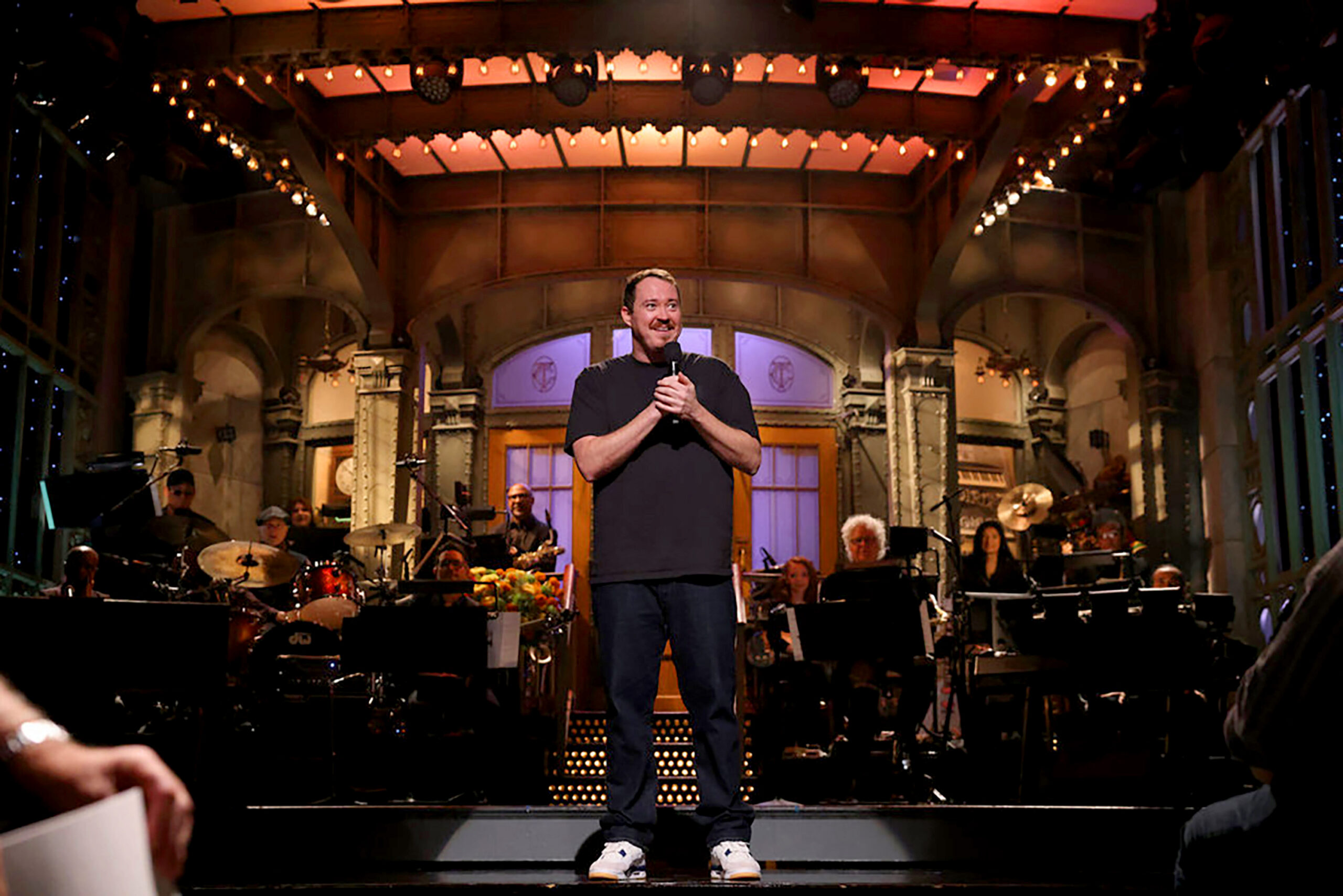
Saturday Night Live host Shane Gillis during the monologue on Saturday, Oct. 10 // Photo by Will Heath/NBC/TNS
In my survey, 30% of participants said that the media has influenced what they look for in a romantic partner. A man might think a woman who’s repeatedly rejected him is just playing hard to get, think that in itself is attractive, and may continue to harass her. This could happen at the gym or anywhere else.
This rhetoric can also affect how women view each other and themselves, because it’s in line with the idea that women who are dressed immodestly are asking to have their boundaries crossed. A woman might blame herself if she’s sexually harassed or assaulted while wearing revealing clothing.
Rhetoric like this may seem minuscule on its own, but it adds up. We typically see multiple videos of an influencer promoting a product before buying it ourselves.
Agreeing with and laughing at this monologue alone won’t turn a man into a predator, but misogyny in the media is death by a thousand cuts. If a man has seen content like this since he was a kid, his friends make misogynistic jokes, and his parents never properly taught him about consent, he might end up like those 50 men on the Chi Phi group chat at Cornell University who saw that “free pussy” text and did nothing to stop the horrors that unfolded.
We can’t end misogyny overnight, especially in the media. But we can look introspectively at how the media is influencing our thoughts and actions. We might discover we’ve been desensitized to harmful ideals and words. It’s up to us to examine ourselves and the media we consume critically.