
Why Gen Z Is Ditching Digital Media
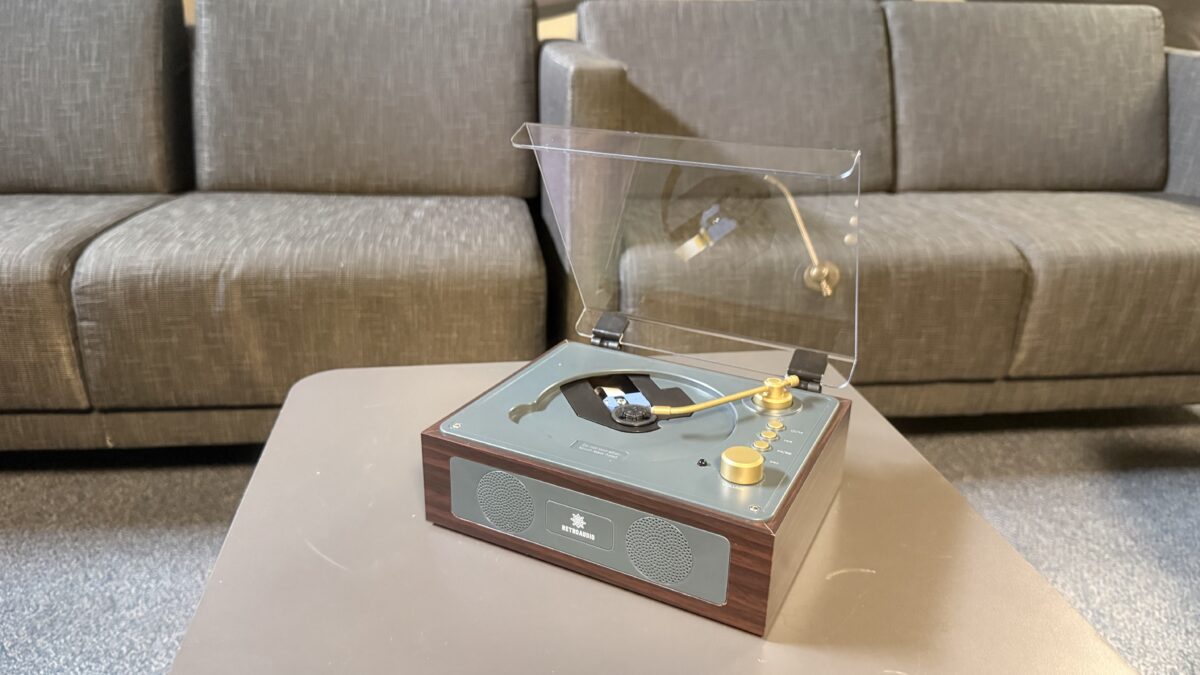

A speaker that can also play CDs rests on a table in Irion Hall. || Photo by Star Herring
So many young people, particularly Gen Z, have been ditching digital media for physical media. Most notably, they’ve been ditching digital audio files and streaming services for physical CDs. Many older people would ask, “Why are they going back to using physical media when you can do everything with a phone or find something to watch and listen to on a TV?”
Music and entertainment data provider company Luminate conducted a midyear report and concluded that CD sales have jumped up by 16%, reaching a total of 16.3 million units, soaring past vinyl’s growth of 2.4% in the first half of 2026. Artists like BTS had a massive impact on the resurgence of CDs, with their 10th studio album, “ARIRANG,” being a big seller. However, beyond K-pop’s influence, sales in CDs year over year still increased by 6.7%, even if K-pop was removed from this equation.
A March article from Newsweek says that young kids are canceling their Spotify and streaming platform subscriptions and instead opting for CDs in hopes to reclaim a sense of ownership of the tunes they love the most. The shift from digital to physical media also reflects a wider generational backlash against subscription culture and digital overload — and a renewed appetite for slower and more intentional ways of consuming media.
Newsweek has also reported people have ditched digital media to fully commit a lifestyle with primarily physical media. Amity, a New York-based creator, has spoken to Newsweek about her reasoning for ditching streaming services for turntables and vinyl records: “I decided to leave streaming platforms because, one day, I realized that I already had a decent collection of music, knew how to access CDs, buy music for an iPod and actually own it. It was something I did my whole life and still partially did as an adult, so I decided to fully commit to letting go of streaming services.”
According to Forbes, Gen Z is also moving away from streaming services to CDs to escape algorithmic environments in search of actual human connection. People want to remove the emotional pressure caused by doomscrolling. The resurgence of physical media also coincides with the demand for more editorial and curated content, meaning that people are turning to tastemakers in hopes of discovering their own interests and persona. Gen Z’s backlash against AI and other modern technology is also another factor in the resurgence of physical media, with kids booing graduation speeches about AI and AI-generated ads and videos.
Physical CDs can offer a way for younger people to communicate their identity and draw much healthier boundaries between digital media and physical life. Using physical media also involves choice, active consumption, and an end point. People can choose when and how to interact with vinyl records and are also less reliant on the impulses of streaming services. Cassette tapes also conjure images of a time when people were free of the obligation of endless scrolling on social media. But at the same time, adoption is also accelerated by people swapping state-of-the-art technology for lo-fi alternatives.
Overall, Gen Z seems to be losing interest in the idea of borrowing the digital media that they’re consuming. Instead, they want to have that ownership over their own media by owning physical media.