
Skinny Celebrities: Where Is the Transparency?
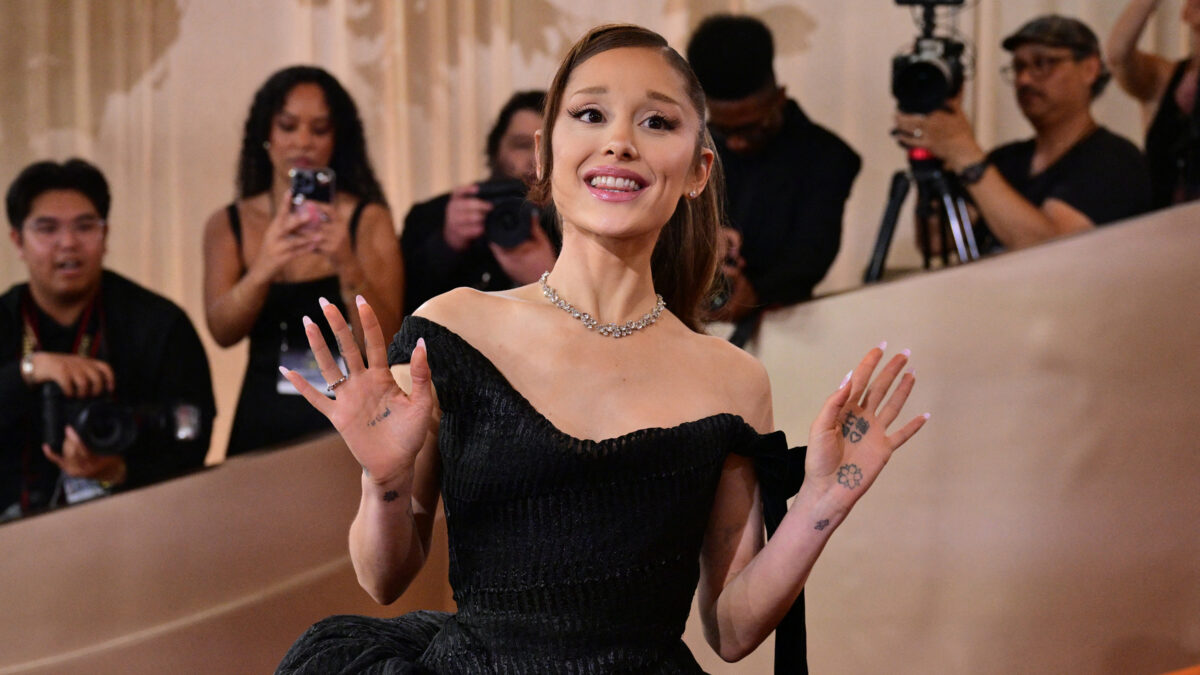

Ariana Grande attends the 83rd annual Golden Globe Awards at the Beverly Hilton hotel in Beverly Hills, California, on Jan. 11. || Photo by Frederic J. Brown/AFP via Getty Images/TNS
Ariana Grande announced in August that following the conclusion of her “The Eternal Sunshine Tour,” she would be taking a step back from making public appearances for an undisclosed amount of time. In addition to taking a step back from the public eye, she will not be starring in Stephen Sondheim’s “Sunday in the Park with George,” a play she was cast in that was set to open in London next summer.
Grande has been at the center of an ongoing public conversation questioning the physical health of many celebrities in the spotlight. Though she has been included and mentioned in this conversation for close to a year, she became the primary subject of attention after she released her newest album on July 31, alongside the music video accompanying the album’s title track, “petal.”
The video portrays her character, Pepper, auditioning for roles in front of casting directors and other industry personnel. Throughout the different auditions, she is labeled as not good enough for the roles and continues to change her appearance and approach to each audition in hopes of landing the role.
Though the metaphor in the video feels quite fitting, the attention generated from this video had more to do with how visibly malnourished Grande appears. Her skin looks pale, and a lot of social media users called to attention the visibility of her skeletal structures being out on display, seeing her ribcage through the skin on her chest, her spine and bones in her back, and her full shoulder anatomy.
Eating disorders and Hollywood’s obsession with unrealistic body types are not news by any means, but this level of skinny that we are witnessing from numerous celebrities is nothing short of concerning. Other actors like Emma Stone, Margot Robbie, Jenna Ortega, and Nicole Kidman are also consistently included in this conversation, as well as other celebrities like Meghan Trainor and Kelly Osbourne, to name a few.
This collective concern isn’t concentrated in a specific group of viewers either. Elmhurst University student Ethan Lopez said he just has a lot of health concerns about it.
“Are they being fed well? Are they exercising?” Lopez said. “It’s scary to think about and I want nothing but the best for everyone.”
Another Elmhurst University student, Carter Nothnagel, said, “After ‘Wicked’ I could tell [Grande] looked really skinny, and a lot of other actors too.” Nothnagel continued, “Like you can see the bones in her face and everything.”
It seems that if you can visibly see an extreme drop in weight over a short period of time, it would be obvious to conclude that there is something unhealthy happening, but I wanted to get insight into what medical professionals look for when analyzing patients with possible eating disorders.
Elmhurst University nursing professor Michael Lyskawka, who is also a practitioner in pediatric behavioral and mental health, sat down with me to answer a few of my questions. When looking for signs of a possible eating disorder, Lyskawka said, “If you have a patient that’s lost 25 pounds in a short period of time, say two months, then that is concerning to us.” Lyskawka continued, “And we always look at BMI to analyze their physical state. A normal range is between 18-25 BMI.”
BMI stands for Body Mass Index, which is a physical health screening tool that uses height and weight to evaluate potential health risks. If a patient’s BMI level is below the normal range, medical professionals will run tests through blood work to make sure the patient is still healthy. These tests include checking the patient’s electrolyte levels and glucose levels, and checking if their metabolism is functioning properly.
“Symptoms-wise, what we look for, or what can happen, there can be hair loss or pale skin from losing weight too quickly.” Lyskawka said. “There could be nonvisible side effects like cardiac effects, GI effects, and mood too with the way people are behaving.”
Elmhurst University student London Gandy touched on this. Gandy said, “I think a lot of celebrities got very skinny out of nowhere or even went crazy too. Like Wendy Williams, she looked fine and she was doing just fine when she had her show, but then right after that she got completely skinny and she just went crazy.”
But what could be causing this extreme weight loss? As with any other online conversation, there are numerous theories trying to get to the bottom of it. One Elmhurst University student speculates that this weight loss is a side effect of a medical process targeted at erasing traumatic memories. Cyerra Ramirez said, “I’ve seen a clip where Ariana Grande admits they’ve used memory erasure or something like it on her, and if they’re doing that with all of these celebrities, that might be causing a lot of radiation and completely deteriorating their muscles and tissues.”
As interesting as this is, the most popular connection and theory in this conversation is about the popularity of GLP-1s. Elmhurst University communications professor Thomas Salek said, “I think a lot of it has to do with the rhetoric surrounding GLP-1s. It’s changing the conversation from body positivity, to here’s a cure. And if there’s a cure it means there’s an illness, so it’s sort of undermining a lot of that rhetoric that did promote the notion of body positivity in the 2010s.”
GLP-1s, however, are only legally and ethically available through prescription by a doctor. A lot of kids and young adults don’t know or recognize the fact that these drugs are being used by adults who have a team of medical professionals overseeing their weight loss and the effects the drug is having on them personally. This lack of understanding is also adding to the long-term effects this trend is having on kids and teenagers.
“We do see the mental health side effects of it — it’s depression and anxiety — because sometimes teens and kids compare themselves to others, right?” Lyskawka said. “With the effects of social media and what’s going on is that they’re not seeing that it needs to be monitored and looked over, that there’s a healthy way to do it. They just see the goal and strive for that goal.”
We’re seeing in real time a lot of these celebrities not addressing the conversation about their alarming weight loss. “The best thing to do is to let that story run and it’s not going to get a whole lot of information, so if you don’t keep feeding it oxygen it will eventually die.” Salek said. “If you just ignore it, it’s an easier way of saying it’s a nonissue.”
The alarming thing about celebrities not addressing this conversation is it’s silently promoting unhealthy weight loss. This silent promotion is continuing the narrative that it’s not okay to be overweight, and that if you are you should want to change yourself. This is because these celebrities who were already at a healthy weight are now visibly dangerously underweight. So, if a celebrity with all of this fame and attention looks great but doesn’t feel confident in their healthy body, what should the average person who is slightly overweight feel about themselves?
“Long-term effects are both mental and physical. Sometimes young adults put themselves into a position they didn’t expect to be in. They start to notice that they have increased depression and anxiety,” said Lyskawka, who pointed out what he and other medical professionals have seen working with teenagers and kids in behavioral and mental health care. “[Teenagers and kids] are more so focused on constantly comparing themselves with the celebrities they are seeing on TikTok or the Reels they are watching or whatever it may be, so we do see that mental health has taken a hit for teenagers because they’re seeing these media influences and that does carry over into adulthood.”
As a celebrity, it would be beneficial to all parties to be transparent with your audience about your physical health — specifically, how you lost this weight and whether or not it was done in a healthy manner. Even addressing personal struggle with eating disorders brings awareness to the dangers of it, and prevents young people from experimenting in a way that has long-lasting negative effects on both their physical and mental health.
If you are struggling with an eating disorder or just need a medical professional’s advice, Elmhurst University offers counseling services to all students. Call 630-617-3565 to make an appointment.