Last Reporter Standing
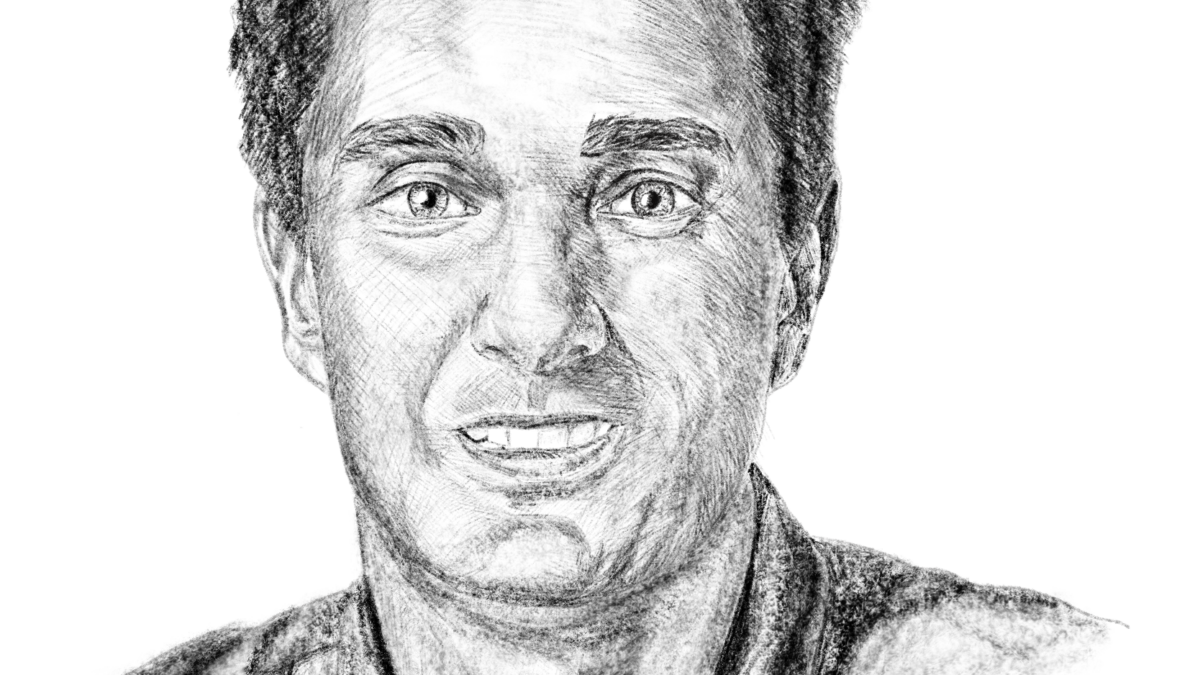
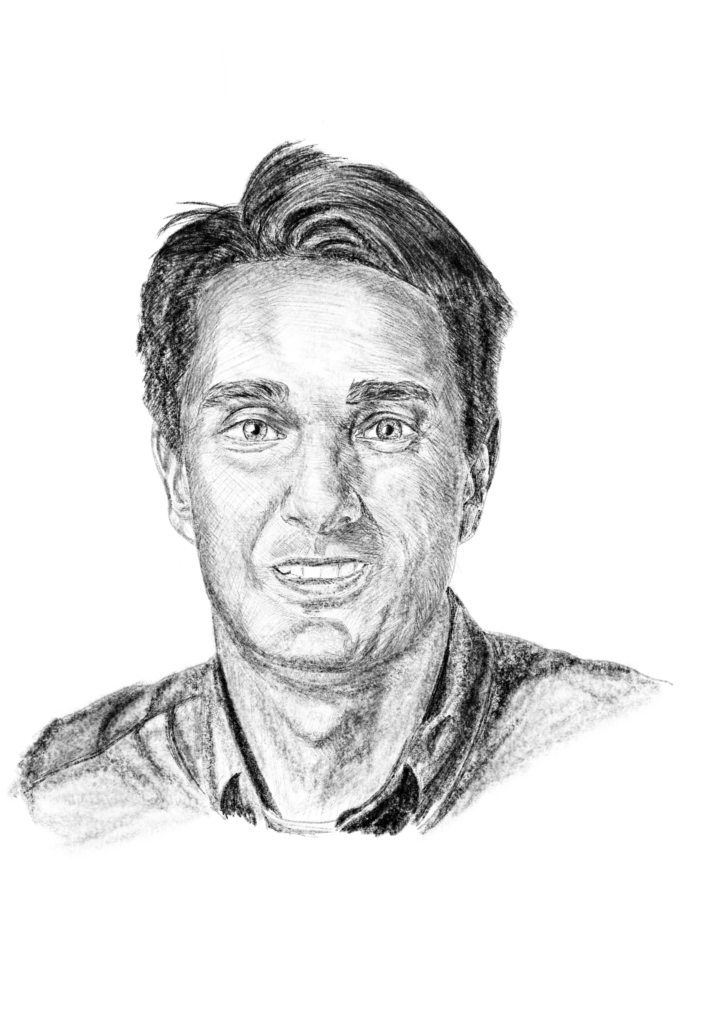
Illustration by Serhii Mahula
Jeremy Jerome Spicer opened fire at two businesses in Burr Ridge, Illinois, in March 2022, killing Nikola Misovic and severely wounding Ana Brankovikj Jovanovikj. Spicer had visited the businesses shortly before he was expected to be fired by Misovic, his boss. He later took his own life.
The shooting drew attention from major news outlets like ABC7 Chicago, CBS News, and the Chicago Sun-Times. But while much of the coverage ended after a day or two, local Patch reporter David Giuliani kept reporting months later.
“They had him red-handed, so there’s no big question, ‘Did he do it?’” said Giuliani, who covers six towns: Elmhurst, Darien, Hinsdale, La Grange, Western Springs, and Burr Ridge. “But I want to know more about the details.”
Giuliani filed a public records request, obtaining a 42-page police report from the Burr Ridge Police Department. Nearly three months after the shooting, Giuliani published two additional stories that revealed new details including witness testimonies and investigators’ accounts of Spicer’s reported hatred towards Serbians.
“If you were to talk to people in the government who criticize me, ‘Oh, he writes too many stories about the same thing.’” Giuliani said. “You got to follow up. If you don’t, you know, there’s so much opportunity if you have a good story.”
In some of his towns, Giuliani serves as the only journalist consistently reporting on what happens. His workload reflects a broader trend in local news: Fewer reporters are covering more communities even as the need for local journalism remains.
Giuliani can track the decline of news in Elmhurst back to 2019, and over his 30-some years as a reporter at approximately 10 local newspapers, he’s witnessed firsthand how the local journalism landscape has changed.
Giuliani — who is tall with a touch of gray hair and speaks as if he’s writing on deadline — writes about six to eight stories a day, and while it’s a busy job, he follows up when he can.
“One of the biggest criticisms of the media is, you know, you write a story, and then you never hear about it again,” Giuliani said.
It’s common practice for reporters to hunt down a niche angle for a story: a way of communicating what happened in a way no one else has yet. But Giuliani said he would rather cover a town that no one else is — breaking each story fresh to his readers, and following up on the stories most reporters have moved on from.
With so many towns and stories to cover, Giuliani schedules emails to himself; his Gmail inbox is full of them. He sends one after every story, reminding himself to follow up months down the road. “I know it’s kind of weird, maybe not as slick as it could be,” Giuliani said. Still, the system works for him. He has reminders scheduled up until next year.
Giuliani covers police, schools, development and growth, government, and any other news he has time to report across his towns. He typically begins his days at 6 a.m, and during his morning jog he’ll listen to government meetings. He looks for interesting quotes and potential stories, hoping that there’ll be at least a couple.
“I look forward to work,” Giuliani said. “Like today, I already had a plan, tomorrow I have a plan — there are stories out there.”
Some weeks are overwhelming, he said, and it’s impossible to keep up. Others are slower, and the quick stories about, say, restaurant openings or police coverage, allow him the time to investigate longer leads.
One reporter covering multiple communities that would otherwise have limited or no access to news is not a lone phenomenon. 3,500 newspapers and more than 75% of newspaper jobs since 2005 have disappeared, said John Volk, a research associate from Medill Local News Initiative. And while an explosion of internet and digital sites fill some gaps, they have failed to come close to replacing the number of outlets and reporters lost.
Giuliani has worried about his job security ever since 2007. The struggling economy in 2009 and the COVID-19 pandemic in 2020 only exacerbated his concerns.
“I’m always afraid, for my entire career,” Giuliani said. “Especially over time, if we don’t have a lot of meetings online, I’m wondering, ‘Oh, are they thinking about giving us all up?’ I do worry. I mean, this is not a solid thing like forever. We don’t know what’s going to happen.”
A county without news outlets brings all sorts of problems, said Volk. Without news coverage, prime rate and municipal borrowing costs go up, and political polarization in the form of split-ticket voting increases, he said.
While Volk is glad Giuliani is contributing to the local news ecosystem in Elmhurst, he said one reporter covering a town concerns him. He said if a town is trying to hide documents from reporters to cover up a scandal, it is much harder for a single person to access the resources necessary to sue the town — something metropolitan newspapers were often able to do in their heyday.
Not everyone has a favorable opinion about Patch. Pamela Lannom from The Hinsdalean wrote a column in 2025 criticizing Patch’s reporting style, describing it as “sensational items that will entice people to click on them.”
Her opinion begins by denouncing a Patch story headlined “Woman gets violent in Hinsdale role-playing: Cops.” Giuliani’s byline is attached to the piece. She told a woman she was interviewing once not to read Patch, advice founded on the belief that “articles focused solely on controversy don’t really tell you what is going on in your community,” according to the column.
While Patch lists over 16,000 sites covering communities across the country, Volk’s research has found that only about 500 of them publish originally reported local news.
“It doesn’t mean that those 15,500 websites don’t have any value, but would I call them original local news producers? Probably not,” said Volk.
It’s difficult to know if there’s ever been a time where the news wasn’t focused on profit. From the stirrings of yellow journalism in the late 1890s to the rise of commercial broadcasting, the news has always had difficulty preventing profit from dictating content. With papers increasingly moving online, page views are shaping the tone of some publications.
Giuliani won’t deny that page views dictate some of his coverage. While he has a passion for the reporting he provides his towns, especially regarding government accountability, he knows that restaurants and crime are among the most popular topics.
Elyse Hoffenberg, Lyons Township elected clerk and Cook County Board candidate, came under scrutiny after a video showing her kissing Bridgeview Mayor Steve Landek became public. Giuliani broke the news through Patch, and the story was later picked up by the Chicago Tribune and the Chicago Sun-Times.
Giuliani wrote multiple follow-up pieces and said the story will most likely be in his top five viewed articles of this year. While he has a natural passion for reporting on government accountability, he acknowledged that the piece has some lower stakes.
“Do I think it’s really the most important piece of work I did in the top five of the year and most make a difference? Probably not,” Giuliani said. “Does it really tell you anything greater about society, really?”
As reporters deliberate between writing for page views and writing for impact, they also must compete with AI.
Emerging research on AI and recent lawsuits have called into question how the technology will impact local news. Volk said he is still waiting to see the impacts and establish evidence determining a causal relationship, but that the early signs are not encouraging.
Over the time that AI bots have entered the mainstream, the Local News Initiative has seen significant losses of web traffic to local news websites. If you google news about Elmhurst and read the AI Overview, there’s a high probability you’ll be reading a synopsis of Giuliani’s reporting.
The New York Times and other publications are suing OpenAI and Microsoft over copyright infringement and limiting fair use in AI training, according to The New York Times.
While OpenAI and Microsoft have argued in court that they are protected through fair use to train their AI on millions of newspaper articles because it creates new content and doesn’t replace the original journalism, recent filings made public on Sept. 17 quoted OpenAI’s head of ChatGPT, Nick Turley, saying that news publishers will face an “existential threat” from AI and that it will be “largely substitutive” of their work, according to Reuters.
“I think there’s got to be a limit, like how much they use,” Giuliani said. “The AI companies say fair use; there’s got to be a limit to what fair use is because if you’re reproducing our stories, that’s not fair.”
Giuliani said he’ll use AI, specifically Grammarly, to assist him in editing articles, and making his wording more concise, but he warned against using the technology overboard and emphasized always taking accountability for one’s work.
“We never want to be in a position with a reader and blame AI,” Giuliani said. “If we’re doing that, that is not an excuse. That is no excuse whatsoever. It’s so horrible. If I’m ever put in that position, I wouldn’t even blame AI. I’d just blame myself.”
Giuliani, who ends his day at 5 p.m. if he has no later meetings, said he doesn’t want to be a clock watcher. While many reporters switch to careers in public relations or other communication fields once starting a family, he said he remains because he enjoys it.
“I am so glad that Elmhurst and the other towns that David covers has him there to do coverage,” Volk said. “That is something that is not true for many towns and counties across the country. So it’s really a boon for the community that he’s there. It is sad that that’s the state of affairs that we can be happy that there’s one reporter.”