5 Strange Things People Want to Build on the Moon

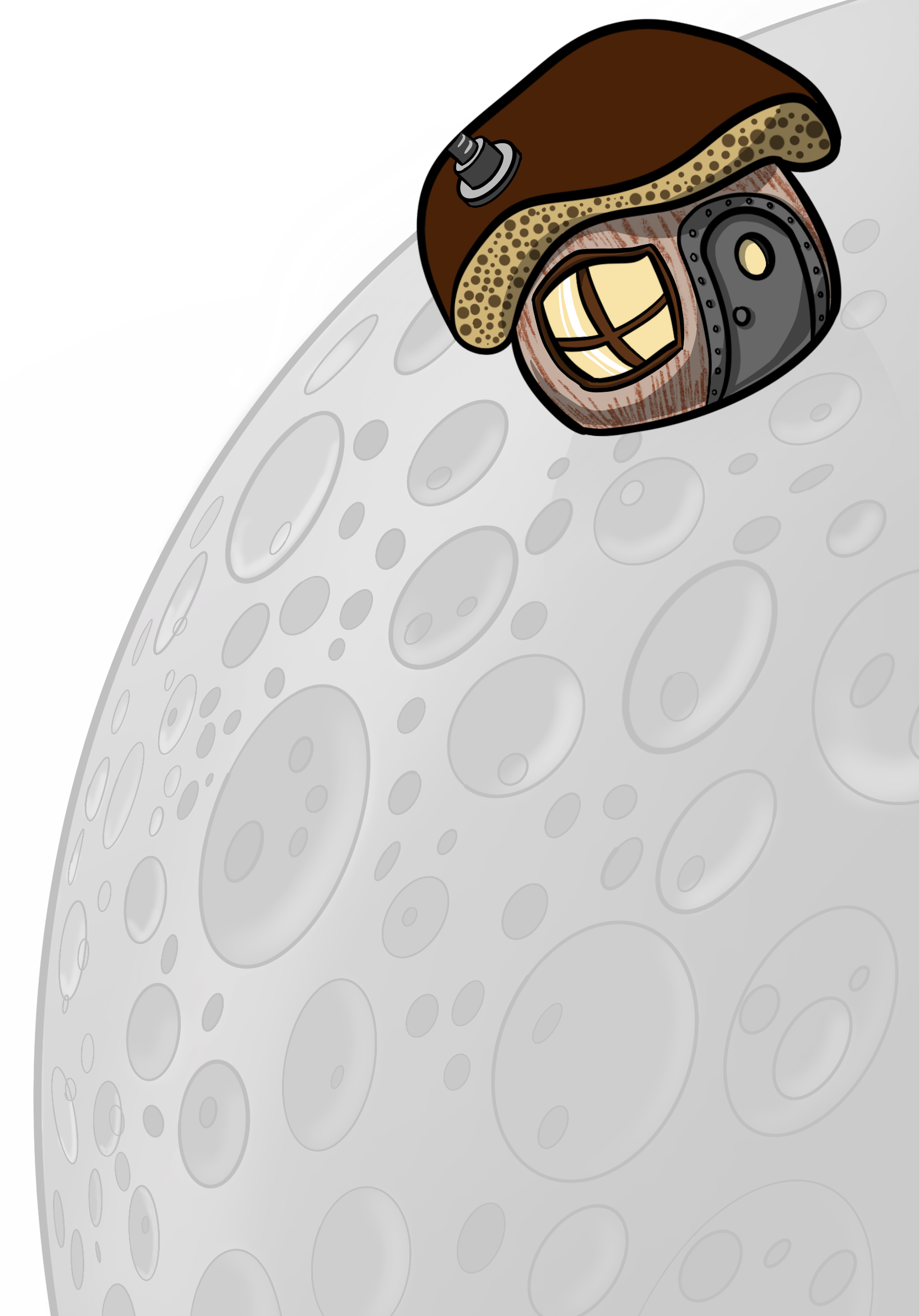
Illustration by Serhii Mahula
Humanity is heading back to the moon, and this time, we’re planning to stay.
NASA officials announced Nov. 7 that the agency is accepting applications for a new astronaut class to grow the Artemis program, an international space initiative that aims to explore the moon for scientific discovery and economic benefits.
The new class of astronauts will also help construct a lunar base — a mission that will transform humanity’s brief visits to a sustained presence in deep space, according to NASA. But amid the buzz of returning to the moon, figures ranging from astrobiologists to CEOs are proposing a number of strange builds of their own.
Take a look at these five strange things people want to build on the moon.
Mushroom Houses
Lynn Rothschild, an astrobiologist who works at NASA, wants to build literal mushroom houses on the moon.
The project, which is funded by NASA, plans to use mycelium, a rootlike structure in fungi, to grow habitats on the moon and even Mars, according to a report published on NASA’s website.
Just like a turtle carries its own habitat, Rothschild believes so can astronauts. Mycelial materials are known insulators, fire resistant and flexible. The material can be used dry, wet, or frozen and can protect against radiation. The material is also self-replicating, so the habitat can be grown and expanded for future use, according to the same report.
A Megatelescope
A megatelescope that resembles “Star Wars”’ infamous planet killer has been partially funded by NASA, according to their website.
NASA robotics technologist Saptarshi Bandyopadhyay is the lead scientist on the Lunar Crater Radio Telescope project. This 1-kilometer-diameter megatelescope will sit inside a crater measuring roughly 3 to 5 kilometers on the far side of the moon.
NASA chose the far side of the moon because it faces away from Earth, meaning human radio transmissions won’t reach the telescope and cause excess noise, according to NASA’s technical report. Building a megatelescope on the moon would allow for the observation of wavelengths that are largely unexplored by humans.
Data Centers
Data centers are large warehouses that store computers that process data used by websites. The rise of artificial intelligence computing has increased the need for data storage, and the annual demand for data centers is set to rise around 20% by 2030, according to global management consultant McKinsey & Co.
Lonestar Data Holdings, a Florida-based technology firm, said in August 2025 that it successfully tested a tiny data center on the moon. The center was transported aboard the Athena lunar lander, according to the BBC.
Space-based data centers could be more environmentally friendly too, according to a report by Thales Alenia Space, a joint venture between French and Italian aerospace groups.
Lunar-based data centers could transmit information to Earth through laser beams or radio frequency transmissions, according to NASA.
Nuclear Power Plants
The United States aims to build a nuclear reactor on the moon by 2030, according to The New York Times.
Nuclear reactors are compact, do not need sunlight to operate, and require little hands-on care on maintenance. These reactors can serve as reliable power for a permanent moon base, according to the same article.
The New York Times reported that some scientists worry nuclear power plants could become space junk that tumbles toward Earth during faulty launches or explode on the moon, turning entire areas unusable.
NASA said a reactor will enable longer-term lunar missions by providing a lot of power regardless of accessible sunlight.
A Modern “Noah’s Ark”
Some scientists are taking inspiration from the Bible to protect humanity’s future.
Aerospace engineer Álvaro Díaz-Flores Caminero said lunar caves could serve as suitable locations for a modern Noah’s Ark, according to a paper he published with five collaborators in IEEE Aerospace Conference Proceedings, a peer-reviewed collection of papers from an annual aerospace conference.
The researchers said the location could store seeds, sperms, eggs, and DNA from endangered animal and plant species. The authors said Earth is threatened by nuclear war, accelerated climate change, and natural disasters, which inspired their idea for preserving biomaterial in a safer location.
The caves can shelter life from radiation, temperature swings, and small meteorite impacts.