
The Shows and Movies Demonstrating Healthy Masculinity
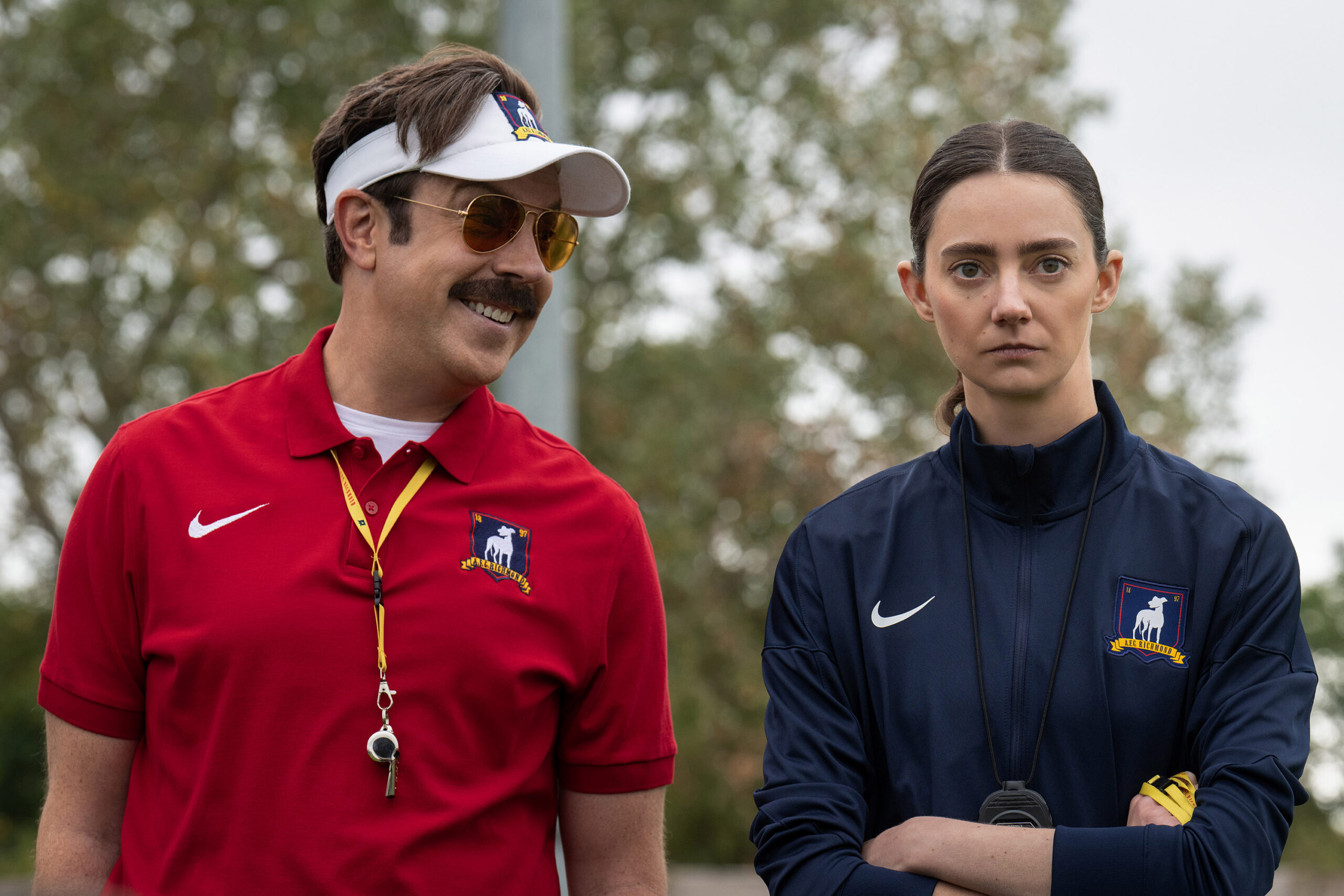
Jason Sudeikis and Tanya Reynolds in “Ted Lasso,” now streaming on Apple TV. || Photo by Colin Hutton/Apple TV/TNS
Rape culture, misogyny, and toxic masculinity are heavily present in media both now and in the past, and that affects how humans think from a very young age. However, there are many sources of media that depict healthy masculinity both in and out of relationships, and consent in relationships.
Avatar: The Last Airbender
“Avatar: The Last Airbender” is nostalgic for those of us who watched it as kids, and it’s still entertaining for us as adults.
In the beginning of season one, Sokka is very sexist and tells his sister Katara on multiple occasions that men are better at fighting and hunting and women are better at homemaking. He also makes her do all the sewing and labels it “women’s work.” When the Kyoshi Warriors, a group of all-female warriors, take him down in a fight, he’s offended that he lost to women.
However, Sokka’s sexism is never condoned. Katara constantly calls him out. His sexist comments aren’t brushed off as jokes either. The joke is when Suki, the leader of the Kyoshi Warriors, allows him to train with them but rage-baits him by making him wear their traditional garb — a dress and makeup.
Sokka grows as a character and stops seeing women as inferior. When the northern water tribe elders tell Katara that she can’t train with them because she’s a girl, Sokka stands up for her. He values her skills as a warrior and doesn’t discriminate because she’s a woman.
Prince Zuko’s character arc shows what it means to be a real man. In the past, his abusive father challenged him to an agni kai, or a duel, for Zuko disagreeing with him in a meeting. Zuko lost, and his father banished him and told him he could only restore his honor by finding the Avatar. Zuko was desperate for his father’s approval and was violent and angry like him. He was especially cruel to his uncle Iroh, who was a true father figure to him.
As the series goes on, Zuko lets go of his resentment and values Iroh’s advice, following his example of masculinity rather than his father’s example. He expresses his feelings by opening up to his friends and his uncle rather than lashing out in anger.
“Avatar: The Last Airbender” may be a kids’ show, but it’s influential. A young boy might learn from Sokka that it’s not okay to tell a girl she can’t do something traditionally masculine because she’s a girl.
Ted Lasso
“Ted Lasso” is a feel-good show about an American football coach hired to coach a soccer team in England. The first three seasons of the show feature a heavily male cast, and many of them cry and open up about their emotions. The show doesn’t shame them or call them weak but instead normalizes their emotions.
Ted struggles with his mental health throughout the series, often experiencing panic attacks. He speaks candidly to his team about the importance of mental health and hires a team therapist. Some of the players are skeptical of the idea in the beginning but eventually all book a session with her. Ted is hesitant to go to therapy himself and hides behind a facade of always being happy and positive.
The show chronicles Ted’s mental health journey and how he slowly opens up to his therapist and learns to cope with his anxiety and handle his panic attacks. He openly talks about his mental health to his team and even to the press, raising awareness for mental health in the sports world.
Off Campus
“Off Campus” is a college soap based on the book with the same title by Elle Kennedy. The show follows music major Hannah Wells and star hockey player Garrett Graham at the fictional Briar University, as they fake dating each other in an attempt to make Hannah’s crush jealous.
A significant part of Hannah’s character arc is healing from a sexual assault in her past. Her flashbacks do not depict the assault graphically but focus on the anxiety she experienced afterwards. Graham listens to her when she opens up to him, but he also takes steps to make her feel safe, such as offering her a drink in a closed can and making sure that she always feels comfortable when they are being intimate.
Graham is also healing from trauma. His dad physically and emotionally abused him growing up, and Graham experiences some anger issues and fears of becoming like his father. He opens up to Hannah, goes to therapy, and actively works on himself.
Graham and his friends are typical college guys. They party, they drink, and they sleep with a lot of women. However, it’s always consensual. The show doesn’t depict them assaulting a girl who’s too drunk to consent and play it off as just something that happens in college.
Anne with an E
The show “Anne with an E” was adapted from Lucy Montgomery’s book “Anne of Green Gables.”
In season three, episode six, titled “The Summit of My Desires,” Josie Pye is sexually assaulted by her crush, Billy Andrews. They go outside during a party and start kissing, but she gets uncomfortable when things get more heated and tells him to stop. He refuses and continues to kiss her, telling her, “I just want to kiss your pretty face,” and touches her breast. She pushes him off of her and runs away.
This episode tackled many important matters. It showed that sexual assault isn’t always a violent rape. A lot of boys and girls grow up with that misconception. A teenager might not think kissing someone without their consent is assault, and a victim might feel like their experience is invalid.
Billy starts to spread rumors that Josie was just too eager to wait until marriage, and the whole town turns on her. Josie’s mother tells her she has to marry Billy because she’s ruined her reputation.
Anne publishes an article defending Josie and women’s rights and gains the support of all her classmates, both the boys and girls. Gilbert Blythe, Anne’s love interest, supports her and reads her article out loud to the class to motivate them to fight for women’s rights.
“Hopefully this episode that deals with assault can help with a change in our society by hopefully bringing the conversations into the homes that are viewing the show,” said actress Joanna Douglas, who plays Muriel Stacy. “I think sexual health and relationship health need to be talked about in the family where it all begins.”
“Anne with an E” is a family-friendly show, but it tackles difficult subject matters with sensitivity and in a way that is age appropriate for the viewers. It is important for parents to talk to their kids about consent, and having good examples in the media goes a long way.
How to Train Your Dragon
“How to Train Your Dragon” doesn’t only depict healthy masculinity, but the main character Hiccup goes against the social norms of his tribe.
The film is set in the fictional island of Berk, which is heavily inspired by Viking culture. Hiccup’s father is the chief of their tribe. They are constantly at war with the dragons, and for a boy to be considered a man, he has to kill one. Hiccup is not a warrior; he makes weapons for the warriors. He wants to kill a dragon to impress his crush and make his father proud. He’s sensitive and empathetic, but those traits aren’t valued within his tribe.
Hiccup tries to kill a dragon but only injures him. But then he rescues him and trains him. He shows the tribe that dragons are not a threat, and that violence isn’t the answer. He risks being ostracized in order to do what is right. At the end of the film, he helps reform how the tribe treats dragons. Instead of killing them, they become allies and train dragons. Hiccup’s father is proud of him and changes his own views because of his son’s example. And he ends up winning over his crush, Astrid.
“How to Train Your Dragon” can teach both boys and men that violence does not equal masculinity, and that they don’t have to act tough to impress a girl. It also encourages them to stand up for what is right, even if it’s not a popular opinion.
These are just a few of many examples in movies and shows that depict healthy masculinity and consent. Unfortunately, rape culture in media isn’t going to disappear overnight, but it’s important to remember that there are positive examples of how to treat women and what it means to be a man in the media. These examples can help men unlearn some of the toxic ideals they grew up with, and help boys grow up with a healthy sense of masculinity.