A New Era of Horror
Horror movies have always found ways to frighten audiences, but a new generation of filmmakers is changing what fear looks like on the big screen. Instead of relying entirely on established franchises with familiar monsters and predictable jump scares, these directors are building unsettling worlds around human obsession and unexplained mysteries in the strange corners of the internet.
The success of the small-budget films like “Obsession” and “Backrooms” this year, alongside the impact of Zack Cregger’s 2025 film “Weapons,” demonstrates how horror is constantly evolving. The directors behind these movies have different backgrounds and filmmaking styles, but their work shares an interest in making ordinary situations feel deeply disturbing.
One of the biggest changes in modern horror is the growing influence of filmmakers who develop their audience online rather than the traditional Hollywood route.
Kane Parsons, better known online as Kane Pixels, became known for his YouTube videos inspired by the “Backrooms,” an internet phenomenon. His videos transformed seemingly ordinary hallways, empty offices, and fluorescent-lit rooms into unsettling and creepy environments. His feature film, “Backrooms,” brought that concept to life with a much larger audience.
Curry Barker followed a different path. Known for online comedy sketches and horror shorts, Barker directed “Obsession,” a supernatural thriller that explores what happens when the desire to get something you want becomes dangerous.
Both filmmakers enter the mainstream media with very recognizable creative identities and audiences already familiar with their work. Their movies also demonstrated that it does not always require lots of money to create a successful film.
According to a report by the Associated Press and the Los Angeles Times, “Backrooms” crushed the opening weekend with approximately $81.5 million recorded, while “Obsession” continued to draw audiences weeks after its release. Their success made the two young filmmakers prominent examples of how internet creators are transitioning online popularity into success in the major market.
Obsession
Barker’s “Obsession” explores the darker side of desires and the consequences of trying to control the outcome of your life.
The film follows a character whose wish to obtain what he wants develops into something much more disturbing. Rather than depending solely on a scary monster or jump scares, the story draws tension from the characters’ decisions and consequences that follow.
That approach reflects a broader direction in modern horror movies: using supernatural situations to explore recognizable human emotion. Desire, insecurity, jealousy, and the need for control can become frightening when the characters allow those feelings to override their judgment.
The film’s relatively small reported production budget also makes its commercial performance notable. Its success suggests that audiences are willing to support original stories when filmmakers present familiar emotions in unexpected ways.
Barker’s background in short-form online entertainment may also help explain the film’s widely positive reviews. Digital creators often learn to establish a distinct mood and capture attention quickly, skills that long-form video directors learn through formal film school and years of experience.
Backrooms
While “Obsession” finds fear in human behavior, “Backrooms” creates anxiety through its environment.
Parsons’ film expands on an internet-born conspiracy theory involving seemingly endless, unfamiliar indoor spaces. The rooms are not necessarily frightening because something is visible. Instead, the repetition, emptiness, and confusing layout create a feeling of unease that something is wrong or abnormal about these spaces.
The concept draws on the idea of liminal spaces, spaces designed for everyday activities that become unsettling when they are empty, unfamiliar, or disconnected from the normal purpose.
An office or basement can feel completely ordinary in one situation and deeply uncomfortable in another. “Backrooms” built an entire horror experience around that contrast. Parsons’ transition from YouTube to major theaters makes people realize how internet culture can become a source of original cinematic ideas.
Audiences who were already familiar with the conspiracy theory could experience a larger-scale film with much bigger of a budget than the content they’re used to on YouTube. On the other hand, new viewers could discover this unsettling idea for the first time in a very intriguing way.
The movie’s success suggests that horror filmmakers do not always need to invent entirely new creatures or scary monsters. Sometimes, they can transform an everyday environment into something audiences have never expected to be scary in the first place.
Weapons
Released in 2025, “Weapons” helped establish Cregger as one of the most distinct directors in recent memory.
Following his other film “Barbarian,” Cregger used the movie “Weapons” to build the mystery around the disappearance of 17 children from the same classroom. The story follows members of a community as they try to understand what happened.
Instead of telling the entire story from one character’s perspective like traditional movies, he divides the narrative through interconnected characters. Each section of the movie reveals new information like a plot twist, completely changing the audience’s understanding of previous events on the flip of a dime.
This style makes uncertainty one of the key parts of the movie-watching experience. The audience is not just waiting for a scary jump scare at any moment, they are actively trying to solve a mystery.
The film also shows what truly happens when a community responds to a scary event with suspicion and fear. Its supernatural elements sit alongside recognizable social tensions, giving the story more than one possible final outcome and making it very hard to predict.
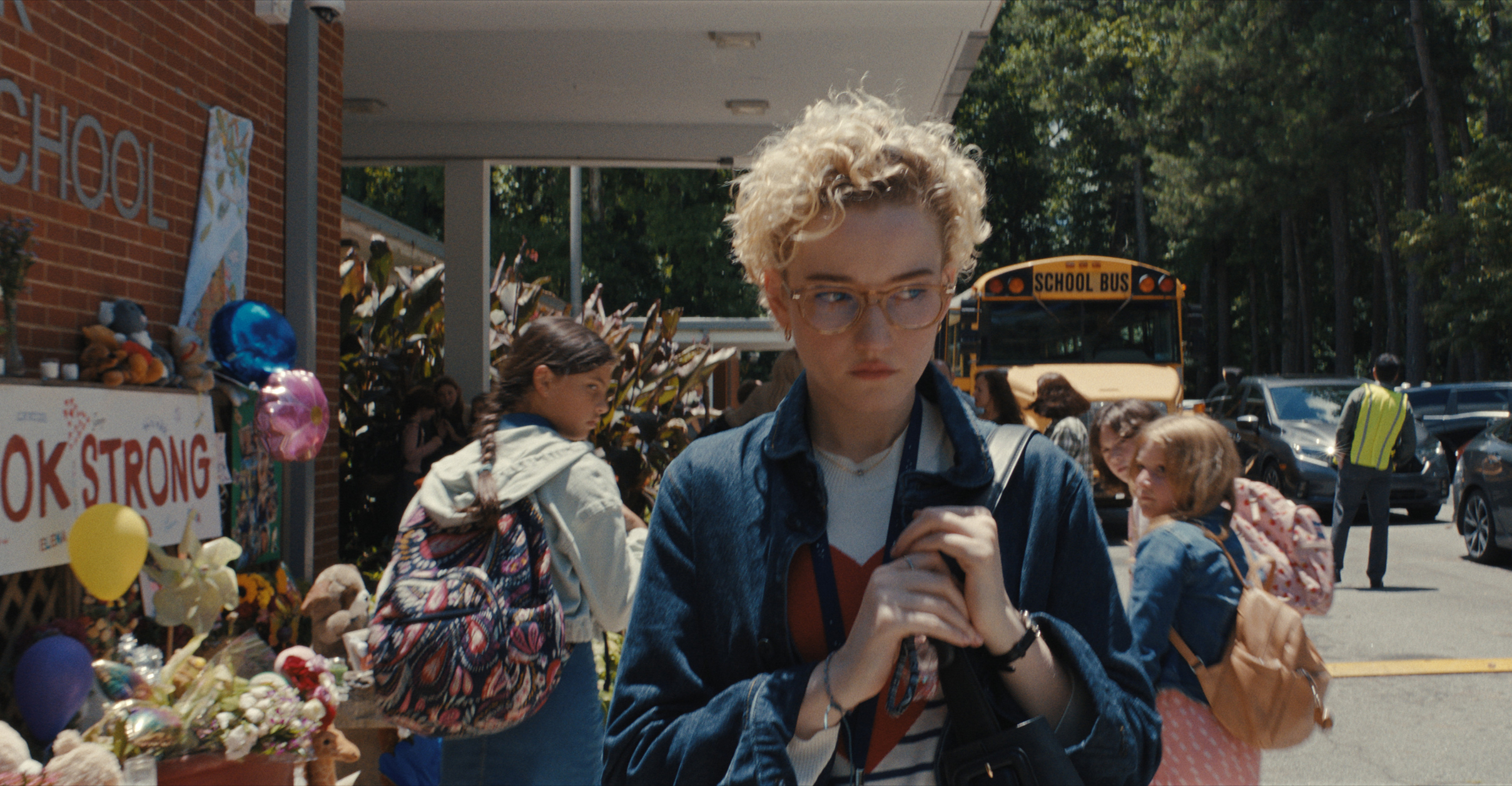
Julia Garner as Justine Gandy in “Weapons.” || Photo by Warner Bros. Pictures/TNS
At first glance, these three movies seem totally different. One explores desire, another turns empty rooms into a nightmare, and the third builds a scary mystery around an entire community. However, they share several important characteristics.
They make the familiar feel unfamiliar, especially in the movie “Backrooms,” by using familiar indoor environments and making them feel uncertain. Secondly, instead of normal jump scares, these films are closer to psychological thrillers and allow the audience to fully submerse themselves into the film. Lastly, these films emphasize the creativity each director brings and are throwing old Hollywood a curveball with their unconventional styles.
Horror is having a complete shift in the way movies are being made. Major studios used to hold all of the power in the production and distribution of films. Now, with these films taking over the horror genre with a fraction of a major-studio budget, it’s forming this new era of valuing original ideas and good writing rather than another installment of a classic horror franchise.
Social media gives emerging filmmakers a way to develop a following before the first major release. This is huge because if filmmakers work hard and build a following on social media, it can give them a chance to make it to the big screens.
However, that does not mean online popularity guarantees success. A decent background in storytelling is also imperative to gaining success. These three filmmakers have shown how digital creativity can become a starting point for larger projects and potentially even be shown on the big screen.
The new generation of horror directors is expanding the definition of what it means to make a scary movie. Fear can emerge from anything, not just a basic jump scare.
“Obsession,” “Backrooms,” and “Weapons” truly show three different approaches to that exact idea mentioned above. Their stories are not interchangeable, but they demonstrate the creative possibilities that emerge when filmmakers take familiar concepts in unexpected directions.
Due to social media, the rise of internet-born directors is on the come and up. They may begin by making short videos or experimenting with digital effects and even developing an audience through an unusual and interesting new idea.